
PTFE Injection Molded Valve for High Purity Chemical Applications: A Practical Guide from Real Engineering Experience
In my experience working with fluoropolymer-lined piping and chemical processing systems, one question appears very often:
Why can’t we just use standard industrial valves in high-purity chemical applications?
The short answer is contamination risk and corrosion failure.
A PTFE injection molded valve for high purity chemical applications is designed specifically to solve these problems. It ensures that ultra-clean chemicals—used in semiconductors, pharmaceuticals, and electronic manufacturing—remain uncontaminated while flowing through complex pipeline systems.
In this article, I will share practical insights from real projects, including material comparisons, selection strategies, and application scenarios that engineers actually face in the field.
What Is a PTFE Injection Molded Valve?
How Injection Molding Improves Valve Performance
Why PTFE Is Essential in High Purity Systems
Industrial Applications in Real Projects
Material & Valve Comparison Table
How to Choose the Right PTFE Valve
Installation & Maintenance Guidelines
FAQ: PTFE Injection Molded Valves
A PTFE injection molded valve for high purity chemical applications is a valve where PTFE fluoropolymer is formed using precision injection molding techniques and integrated with a reinforced valve body.
This design combines:
Structural strength (metal or reinforced base)
Chemical resistance (PTFE lining or molded parts)
High purity flow path
I often explain it like this:
It’s like giving a strong steel skeleton a chemically inert protective skin.
Key functions include:
Flow isolation
Corrosive media control
High purity chemical transfer
Long-term system protection
Injection molding is a key manufacturing method for modern fluoropolymer valves.
PTFE resin is precisely heated and prepared
Material is injected into a mold cavity
Controlled cooling ensures structural stability
Final machining and inspection are performed
High dimensional accuracy
Stable sealing performance
Reduced leakage risk
Suitable for mass production
Consistent product quality
| Method | Precision | Production Efficiency | Cost Level | Application |
|---|---|---|---|---|
| Injection Molding | High | High | Medium | Industrial valves |
| Machining | Very High | Low | High | Custom parts |
| Compression Molding | Medium | Medium | Medium | Basic PTFE parts |
Source: Polymer Manufacturing Engineering Handbook, 2024.
From my field experience, injection molding offers the best balance between performance and scalability.
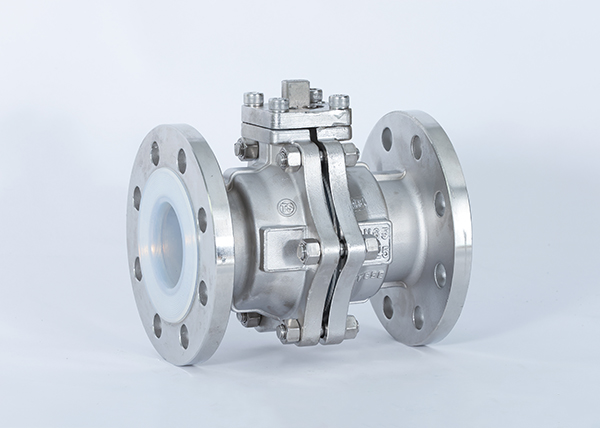
PTFE is one of the most chemically inert materials available in industrial engineering.
Strong acid resistance
Alkali resistance
High thermal stability (~260°C)
Extremely low friction surface
Minimal particle generation
| Material | Chemical Resistance | Purity Level | Temperature Resistance | Industrial Use |
|---|---|---|---|---|
| PTFE | Excellent | Very High | Excellent | High purity chemical systems |
| PFA | Excellent | Ultra High | Excellent | Semiconductor industry |
| PVDF | Good | Medium | Good | General chemical use |
Source: Industrial Fluoropolymer Material Standards Report, 2024.
In high-end semiconductor projects, PTFE is often the baseline requirement.
The PTFE injection molded valve for high purity chemical applications is widely used in industries where contamination control is critical.
Used in:
Wet etching systems
Ultra-pure chemical distribution
Wafer cleaning lines
Even microscopic contamination can reduce yield rates.
Applications include:
Sterile fluid transfer
API production systems
Purified water pipelines
Used for:
High purity solvent delivery
Chemical blending systems
Precision dosing lines
Used for:
Acid and alkali handling
Corrosive media transfer
Reactor feeding systems
One real project I worked on replaced stainless steel valves with PTFE injection molded valves, significantly reducing maintenance shutdowns.
Choosing the right valve requires understanding system behavior.
| Valve Type | Corrosion Resistance | Purity Level | Pressure Control | Best Application |
|---|---|---|---|---|
| PTFE Injection Molded Valve | Excellent | Very High | Good | High purity chemical systems |
| Stainless Steel Valve | Medium | Medium | Excellent | General industrial use |
| PVC Valve | Good | Low | Low | Water systems |
| PFA Valve | Excellent | Ultra High | Good | Semiconductor industry |
Source: Chemical Process Equipment Selection Guide, 2024.
From engineering practice, PTFE injection molded valves are the most balanced solution for cost and purity.
Selecting the right valve is more than just matching size.
Check:
Acid type
Concentration level
Oxidizing properties
Ensure material stability under:
Continuous operation temperature
Peak temperature spikes
Evaluate:
System working pressure
Surge pressure conditions
For high-end systems:
Low particle emission required
Cleanroom manufacturing preferred
Decide:
On/off control
Flow regulation
Emergency isolation
✔ Chemical compatibility confirmed
✔ Pressure range verified
✔ Temperature range validated
✔ Purity level defined
✔ Installation method confirmed
Proper installation ensures long service life.
Align piping before tightening
Avoid mechanical stress on valve body
Follow flow direction markings
Use compatible sealing materials
Regular sealing inspection
Monitor leakage signs
Clean external surfaces
Check actuation smoothness
Over-tightening connections
Ignoring chemical compatibility
Improper installation alignment
Using wrong valve type for application
In real projects, installation errors are more common than product failures.
It is used for controlling high purity and corrosive chemical flow in industrial systems.
Because it provides excellent corrosion resistance and ultra-high purity performance.
Yes, they are widely used for strong acids such as sulfuric, nitric, and hydrochloric acids.
They are used in semiconductor, pharmaceutical, electronic chemical, and chemical processing industries.
It provides high precision, stable quality, and efficient mass production.
From my engineering experience in fluoropolymer systems, a PTFE injection molded valve for high purity chemical applications is not just a component—it is a critical safeguard for process stability and product quality.
It ensures:
Reliable flow control
High purity protection
Long-term corrosion resistance
Reduced maintenance downtime
At Jiangsu JIECHUANG New Materials Co., Ltd., we focus on delivering advanced fluoropolymer valves and integrated chemical system solutions for demanding global industries.
 RELATED
Address: No. 1 Jingpohu Road, Suqian-Suzhou Industrial Park, Suqian City, Jiangsu Province
Xu Hao: 13813955525
Xu Gang: 15189058237
E-mail: zhaojiguang@jsjcxcl.com.cn


Copyright © 2023 Jiangsu Jiechuang New Materials Co., Ltd sitemap
This website uses cookies to ensure you get the best experience on our website.

 Pусский
 日本語
日本語 한국어
한국어 हिन्दी



 WhatsApp
 Phone
Phone