
High Performance PFA pneumatic valve for industrial pipeline systems: A Practical Guide for Reliable Automated Flow Control
In my experience working with fluoropolymer-lined pipeline systems, one question often comes up from engineers:
Why do we still rely so heavily on pneumatic valves in modern industrial systems?
The answer is simple—because stability, safety, and automation matter more than ever.
A high performance PFA pneumatic valve for industrial pipeline systems is not just a flow control device. It is a critical automation component that helps control corrosive chemicals, maintain system safety, and improve production efficiency.
In chemical plants, semiconductor fabs, and pharmaceutical facilities, even a small valve failure can stop an entire production line. That’s why understanding pneumatic valve selection is so important.
In this article, I will explain how these valves work, where they are used, and how to choose the right one based on real engineering practice.
What Is a PFA Pneumatic Valve?
How Pneumatic Valves Work in Industrial Systems
Why PFA Material Is Essential
Industrial Applications in Real Projects
Comparison of Valve Technologies
How to Choose the Right Pneumatic Valve
Installation and Maintenance Tips
FAQ About Pneumatic Valves
A high performance PFA pneumatic valve for industrial pipeline systems is a valve that uses compressed air to control opening and closing, while the wetted parts are made of PFA fluoropolymer material.
It consists of two main parts:
Pneumatic actuator (air-driven control unit)
PFA-lined valve body (fluid contact part)
I usually explain it like this:
Pneumatic valves are like “automatic hands” in a pipeline system—they respond instantly when air pressure changes.
Key functions include:
Automatic flow control
Remote operation capability
Fast switching response
Reliable shutoff for corrosive fluids
Pneumatic valves use compressed air to drive movement.
Air is supplied to the actuator
Pressure moves the piston or diaphragm
Valve opens or closes accordingly
Flow is controlled or fully shut off
Fast response speed
Suitable for automation systems
Safe for hazardous environments
Easy integration with control systems
From field experience, pneumatic systems are preferred whenever safety and automation are top priorities.
The performance of a pneumatic valve depends heavily on its material.
PFA is widely used in chemical industries because of its stability.
Excellent chemical resistance
High purity performance
Temperature resistance up to ~260°C
Non-stick smooth surface
Low particle generation
| Material | Corrosion Resistance | Purity Level | Automation Suitability | Typical Use |
|---|---|---|---|---|
| PFA | Excellent | Very High | Excellent | Semiconductor & chemical systems |
| PTFE | Excellent | High | Good | Chemical pipelines |
| PVDF | Good | Medium | Good | Water & general chemical use |
Source: Industrial Fluoropolymer Engineering Handbook, 2024.
PFA is the preferred choice when both purity and corrosion resistance are required.
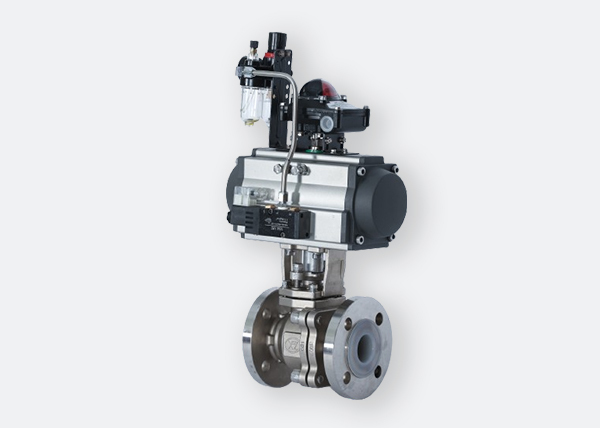
The high performance PFA pneumatic valve for industrial pipeline systems is widely used across multiple industries.
Used in:
Ultra-pure chemical delivery systems
Wet process control lines
Etching and cleaning systems
Used for:
Acid and alkali transfer systems
Solvent distribution pipelines
Reactor feed automation
Applications include:
Sterile liquid transfer
CIP/SIP systems
Process automation lines
Used in:
High purity chemical mixing
Production line automation
Fluid dosing systems
One real case I handled involved replacing manual valves with pneumatic PFA valves, reducing operator intervention by over 50%.
Choosing the right valve type affects efficiency and safety.
| Valve Type | Automation Capability | Corrosion Resistance | Response Speed | Best Application |
|---|---|---|---|---|
| PFA Pneumatic Valve | Excellent | Excellent | Very Fast | Automated chemical systems |
| Manual Valve | None | Medium | Slow | Simple systems |
| Electric Valve | High | Good | Medium | Precision control |
| Hydraulic Valve | High | Good | Fast | Heavy-duty systems |
Source: Industrial Automation Valve Selection Guide, 2024.
From practical engineering perspective, pneumatic valves offer the best balance between speed, safety, and reliability.
Selecting a valve requires more than just matching pipe size.
Check:
Acid type
Concentration
Oxidation level
Ensure actuator and body can handle:
Working pressure
Peak pressure
System fluctuations
Decide whether you need:
On/off control
Flow modulation
Emergency shutoff
Common options:
Single acting
Double acting
Spring return
Consider:
Cleanroom requirements
Corrosive atmosphere
Space limitations
✔ Chemical compatibility confirmed
✔ Pressure rating verified
✔ Automation requirement defined
✔ Actuator type selected
✔ Installation space checked
Proper installation ensures long-term performance.
Ensure correct air pressure supply
Align pipeline properly
Avoid mechanical stress on valve body
Use compatible sealing materials
Regular actuator inspection
Check air leakage
Monitor valve response speed
Clean external surfaces
Incorrect air pressure setting
Ignoring chemical compatibility
Poor piping alignment
Lack of routine maintenance
In my experience, most valve failures are caused by system setup issues, not product defects.
It is used for automated control of corrosive and high-purity chemical fluids in industrial pipeline systems.
Because it offers fast response, high reliability, and safe operation in hazardous environments.
Yes, they are widely used for strong acids such as sulfuric acid, hydrochloric acid, and nitric acid.
Pneumatic valves are faster and safer for harsh environments, while electric valves provide more precise control.
They are used in semiconductor, pharmaceutical, chemical processing, and electronic manufacturing industries.
From my engineering experience in fluoropolymer systems, a high performance PFA pneumatic valve for industrial pipeline systems is one of the most important components in modern automated chemical processing.
It ensures:
Safe flow control
High system efficiency
Reliable automation
Long-term corrosion resistance
At Jiangsu JIECHUANG New Materials Co., Ltd., we continue to develop advanced fluoropolymer valves and integrated chemical system solutions for global high-tech industries.
Address: No. 1 Jingpohu Road, Suqian-Suzhou Industrial Park, Suqian City, Jiangsu Province
Xu Hao: 13813955525
Xu Gang: 15189058237
E-mail: zhaojiguang@jsjcxcl.com.cn


Copyright © 2023 Jiangsu Jiechuang New Materials Co., Ltd sitemap
This website uses cookies to ensure you get the best experience on our website.

 Pусский
 日本語
日本語 한국어
한국어 हिन्दी



 WhatsApp
 Phone
Phone