
Industrial Fluorine Lined Butterfly Valve for Pipeline Control – Reliable Solution for Corrosive Flow Systems
In my years working with fluoropolymer-lined piping systems, I’ve seen a common problem across chemical plants: standard metal valves fail too early when exposed to strong acids, alkalis, or mixed chemical media.
That’s exactly where the Industrial Fluorine Lined Butterfly Valve for Pipeline Control becomes a practical solution. It is designed to maintain stable flow control while resisting aggressive corrosion environments found in chemical, semiconductor, and process industries.
In this article, I’ll walk you through how I evaluate, select, and apply this valve in real industrial projects based on engineering practice and field experience.
1. What is a Fluorine Lined Butterfly Valve?
2. Core Structure and Material Selection
3. Technical Performance Parameters
4. Where I Use It in Real Projects
5. Comparison with Other Industrial Valves
6. How to Choose the Right Model
7. Installation and Maintenance Tips
8. FAQ Section
The Industrial Fluorine Lined Butterfly Valve for Pipeline Control is a quarter-turn valve designed for on/off and throttling control in corrosive pipelines.
The key feature is its internal lining made of PTFE, FEP, or PFA, which isolates the metal body from direct chemical contact.
From my experience, this structure significantly extends service life in acid transfer systems, solvent pipelines, and wet chemical processes.
When I evaluate a Industrial Fluorine Lined Butterfly Valve for Pipeline Control, I focus on three layers:
Body material: cast steel or stainless steel
Lining material: PTFE / PFA / FEP
Seat sealing: fluororubber or PTFE reinforced sealing ring
| Material | Corrosion Resistance | Max Temperature | Typical Application |
|---|---|---|---|
| PTFE | Excellent | 180°C | Strong acids, solvents |
| PFA | Excellent | 200°C | Semiconductor & ultra-pure systems |
| FEP | Very Good | 150°C | General chemical transfer |
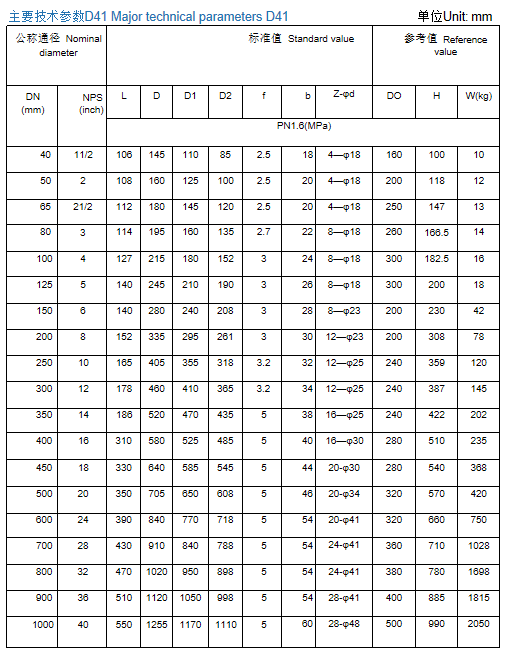
Below is a simplified engineering reference I often use during project selection:
| Parameter | Value Range |
|---|---|
| Pressure rating | 0.6 – 1.6 MPa |
| Temperature range | -20°C to 180°C |
| Leakage standard | Zero visible leakage |
| Actuation type | Manual / Pneumatic / Electric |
These parameters make the Industrial Fluorine Lined Butterfly Valve for Pipeline Control suitable for both standard and high-purity systems.
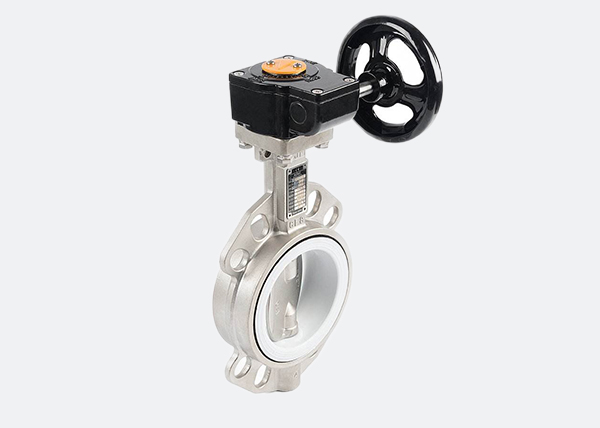
In real engineering projects, I typically see this valve used in:
Chemical acid/alkali transfer pipelines
Semiconductor wet process systems
Pharmaceutical reaction fluid control
Wastewater neutralization systems
Fine chemical production lines
For example, in a wet electronic chemical plant, we used the Industrial Fluorine Lined Butterfly Valve for Pipeline Control to replace stainless steel valves that were failing every 6–8 months due to HF acid exposure. After switching, maintenance cycles extended beyond 2 years.
Choosing the right valve type is not just about cost—it’s about system stability.
| Valve Type | Corrosion Resistance | Flow Control | Cost Level | Service Life |
|---|---|---|---|---|
| Fluorine Lined Butterfly Valve | High | Good | Medium | Long |
| Gate Valve | Medium | Poor | Low | Medium |
| Ball Valve | High | Excellent | High | Medium |
From my field experience, the Industrial Fluorine Lined Butterfly Valve for Pipeline Control offers the best balance between cost and chemical resistance.
When selecting a valve, I always recommend focusing on:
Chemical composition of media
Temperature fluctuation range
Required sealing level
Automation needs (manual or pneumatic)
For high-purity systems, I usually recommend PFA-lined versions of the Industrial Fluorine Lined Butterfly Valve for Pipeline Control because of their ultra-low contamination risk.
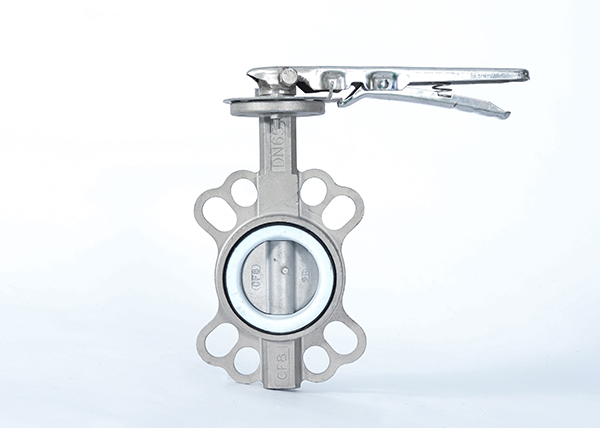
Based on site experience, here are key points I always emphasize:
Always align pipeline flanges before tightening bolts
Avoid over-torquing to prevent liner deformation
Perform pressure testing before startup
Check actuator response every 6 months
Replace seals only with compatible fluoropolymer materials
Proper installation directly affects the long-term performance of the Industrial Fluorine Lined Butterfly Valve for Pipeline Control.
Yes, PTFE and PFA lined versions are designed for strong acid resistance.
In stable chemical environments, it can exceed 5–8 years.
Yes, especially PFA-lined versions used in semiconductor processes.
Yes, it supports pneumatic and electric actuators.
Regular seal inspection and actuator performance checks.
From an engineering standpoint, the Industrial Fluorine Lined Butterfly Valve for Pipeline Control is not just a component—it’s a stability factor in corrosive pipeline systems.
When selected and installed correctly, it significantly reduces downtime, improves safety, and ensures consistent process control in demanding industrial environments.
Address: No. 1 Jingpohu Road, Suqian-Suzhou Industrial Park, Suqian City, Jiangsu Province
Xu Hao: 13813955525
Xu Gang: 15189058237
E-mail: zhaojiguang@jsjcxcl.com.cn


Copyright © 2023 Jiangsu Jiechuang New Materials Co., Ltd sitemap
This website uses cookies to ensure you get the best experience on our website.

 Pусский
 日本語
日本語 한국어
한국어 हिन्दी



 WhatsApp
 Phone
Phone