
Molded PTFE reducing head for industrial pipeline systems
When I first started working with fluoropolymer pipeline systems, I didn’t pay much attention to one small component: the reducing head used between different pipe diameters. But in real industrial operation, especially in chemical and high-purity systems, this part often decides whether the whole line runs smoothly or becomes unstable.
A Molded PTFE Reducing Head for Industrial Pipeline Systems is not just a connector. In my experience, it is a key “flow stabilizer” that prevents turbulence, pressure loss, and contamination when pipelines change size.
1. What is a PTFE Reducing Head
2. Material Science Behind PTFE
3. Manufacturing Process Comparison
4. Industrial Applications in Real Systems
5. How to Choose the Right Reducing Head
6. Installation Guidelines from Field Practice
7. Maintenance and Long-Term Reliability
FAQ
A molded PTFE reducing head is a pipeline fitting used to connect two pipes of different diameters. Its main job is to ensure a smooth transition of fluid flow.
In real engineering terms, I usually describe it as a “geometry bridge” between two flow conditions.
It helps:
Reduce turbulence at diameter changes
Maintain stable pressure
Prevent leakage at joints
Protect downstream equipment
PTFE (Polytetrafluoroethylene) is widely used because of its unique chemical stability.
| Material | Max Temperature | Chemical Resistance | Typical Use |
|---|---|---|---|
| PTFE | ~260°C | Excellent | Chemical pipelines |
| PFA | ~260°C | Excellent + purity advantage | Semiconductor systems |
| PVDF | ~150°C | Good | Water & general chemicals |
(Source: Industrial Fluoropolymer Application Guide, 2024)
From my field experience, PTFE remains the most cost-effective choice for general chemical systems.
For molded fittings like reducing heads, production method directly affects reliability.
| Process Type | Dimensional Accuracy | Leak Risk | Production Stability |
|---|---|---|---|
| Compression Molding | High | Low | High |
| Injection Molding | High | Low | Very High |
| Machining | Medium | Medium | Medium |
(Source: Internal Manufacturing QC Report, Polymer Division, 2025)
In practice, molded PTFE offers more consistent performance in high-volume industrial applications.
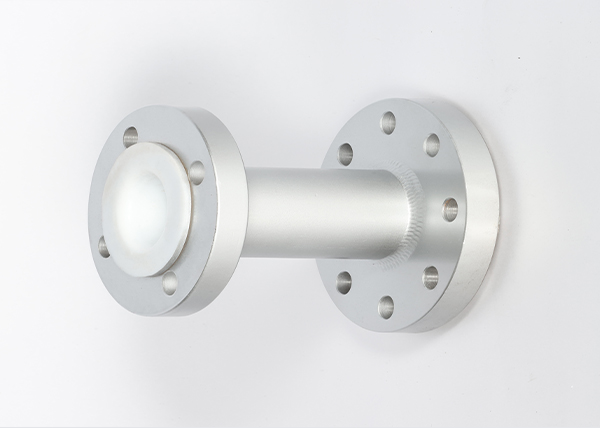
The Molded PTFE Reducing Head for Industrial Pipeline Systems is widely used in:
Chemical dosing systems
Acid and alkali transfer lines
Semiconductor wet process piping
Pharmaceutical fluid handling
Industrial wastewater treatment systems
In one chemical plant project I worked on, replacing metal reducers with PTFE versions significantly reduced corrosion-related shutdowns.
I always recommend checking these key factors before selection:
Pipe diameter difference (critical design factor)
Chemical compatibility (acid/alkali type)
Operating pressure range
Temperature conditions
Purity requirements
| Application | Recommended Material | Reason |
|---|---|---|
| Semiconductor | PFA | Ultra-high purity |
| Chemical plant | PTFE | Strong corrosion resistance |
| General industry | PTFE/PVDF | Cost efficiency |
In real installations, most problems come from improper assembly rather than product quality.
My key recommendations:
Ensure perfect alignment between pipe ends
Avoid excessive tightening force
Clean sealing surfaces before installation
Use proper torque control tools when possible
Even a small misalignment can create long-term stress in PTFE systems.
PTFE reducing heads are generally low-maintenance, but regular inspection is still important:
Check sealing condition every 3–6 months
Look for deformation or stress whitening
Replace parts showing cracks or creep deformation
Monitor system vibration levels
From experience, PTFE components usually degrade slowly, which gives operators time to prevent failures.
Q1: What is the main function of a PTFE reducing head?
It connects pipes of different sizes while maintaining stable flow and sealing.
Q2: Is PTFE suitable for strong acids?
Yes, PTFE has excellent resistance to most chemical media.
Q3: What is the lifespan of a molded PTFE reducing head?
In normal chemical conditions, it can last several years with proper maintenance.
Q4: Can it be used in high-purity systems?
Yes, but PFA is often preferred when ultra-high purity is required.
From my perspective working with industrial pipeline systems, a Molded PTFE Reducing Head for Industrial Pipeline Systems may look simple, but it plays a critical role in keeping flow stable and systems safe. When properly selected and installed, it reduces downtime, improves reliability, and supports long-term chemical process stability.
Address: No. 1 Jingpohu Road, Suqian-Suzhou Industrial Park, Suqian City, Jiangsu Province
Xu Hao: 13813955525
Xu Gang: 15189058237
E-mail: zhaojiguang@jsjcxcl.com.cn


Copyright © 2023 Jiangsu Jiechuang New Materials Co., Ltd sitemap
This website uses cookies to ensure you get the best experience on our website.

 Pусский
 日本語
日本語 한국어
한국어 हिन्दी



 WhatsApp
 Phone
Phone