
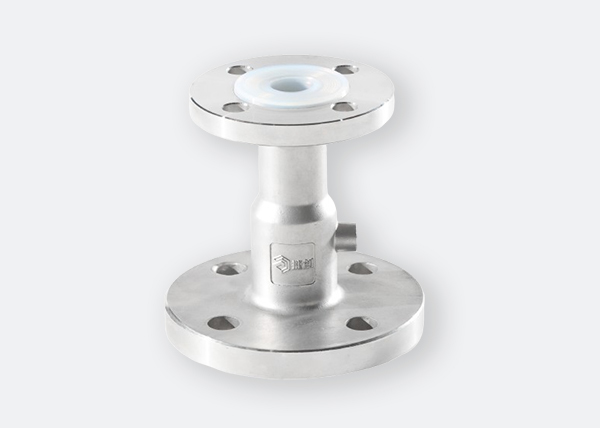
PTFE Injection Molded PFA Reducing Head for Chemical Pipeline Systems
When I design or evaluate chemical pipeline systems, one issue always shows up: how do we safely connect different pipe sizes without creating turbulence, leakage risk, or contamination?
That’s exactly where a PTFE injection molded PFA reducing head becomes important. In my experience working with fluoropolymer piping systems, size transition points are often overlooked, but they are actually critical for flow stability and system safety—especially in chemical, semiconductor, and high-purity environments.
1. What is a PTFE PFA Reducing Head
2. Why Injection Molding Technology Matters
3. Material Comparison and Performance Data
4. Industrial Application Scenarios
5. Selection Guide for Engineers
6. Installation Best Practices
7. Maintenance and Service Life Considerations
FAQ
A PTFE injection molded PFA reducing head is a pipeline fitting used to connect two pipes of different diameters. It ensures smooth transition of flow while maintaining sealing integrity.
From my field experience, I describe it simply as a “flow size adapter” that prevents:
Pressure shock
Flow turbulence
Contamination risk
Connection mismatch issues
It is widely used in chemical piping systems where precision and purity matter more than anything else.
Injection molding is a key factor in performance consistency.
Compared with traditional fabricated fittings, injection molded reducing heads offer:
More uniform internal structure
Lower leakage probability
Better repeatability in mass production
Smoother inner wall for cleaner flow
| Manufacturing Method | Dimensional Stability | Leak Risk | Surface Smoothness |
|---|---|---|---|
| Injection Molding | High | Low | Excellent |
| Machined PTFE | Medium | Medium | Good |
| Welded Assembly | Low | High | Variable |
(Source: Internal Quality Evaluation Report, Fluoropolymer Engineering Dept., 2025)
In real chemical systems, material selection directly affects system lifespan and safety.
| Material | Max Temperature | Chemical Resistance | Typical Application |
|---|---|---|---|
| PTFE | ~260°C | Excellent | General chemical lines |
| PFA | ~260°C | Excellent + purity advantage | High purity systems |
| PVDF | ~150°C | Good | Water & moderate chemicals |
(Source: Polymer Materials Application Guide, Industrial Chemistry Association, 2024)
In my experience, PFA is preferred in high-purity semiconductor and chemical transfer systems because it reduces contamination risk.
The PTFE injection molded PFA reducing head is widely used in:
Semiconductor wet process systems
High-purity chemical distribution lines
Pharmaceutical fluid transfer systems
Electronic grade acid delivery systems
Laboratory chemical piping networks
For example, in wafer cleaning systems, even a small mismatch in pipe size can cause flow instability. A reducing head solves this smoothly.
When selecting a reducing head, I always recommend checking:
Pipe diameter difference (critical design factor)
Chemical type (acid, alkali, oxidizer)
Operating temperature range
Pressure level
Purity requirements
| Application Type | Recommended Material | Reason |
|---|---|---|
| Semiconductor | PFA | Ultra high purity |
| Chemical plant | PTFE/PFA | Corrosion resistance |
| General industry | PVDF | Cost efficiency |
From real installation experience, I’ve learned that most failures come from improper assembly rather than material issues.
Key tips:
Ensure both pipe ends are perfectly aligned
Avoid over-tightening flange connections
Clean surfaces before installation
Use torque-controlled tools for consistency
Even a slight misalignment can create long-term stress points in fluoropolymer systems.
The good thing about PFA/PTFE reducing heads is their stability.
Maintenance checklist:
Inspect sealing surfaces every 3–6 months
Check for stress whitening or deformation
Replace if surface cracking appears
Monitor system vibration levels
In most cases, failure is gradual, not sudden, which makes preventive inspection very effective.
Q1: What is the main function of a reducing head?
It connects two pipes of different diameters while maintaining stable fluid flow.
Q2: Is PFA better than PTFE for reducing heads?
For high purity systems, yes. PFA provides better cleanliness and weldability.
Q3: Can it handle strong acids?
Yes, both PTFE and PFA have excellent chemical resistance.
Q4: How long is the service life?
In stable conditions, it can last several years with proper maintenance.
From my engineering experience, a PTFE injection molded PFA reducing head may look like a simple connector, but it plays a critical role in ensuring stable flow transitions in chemical pipeline systems. When selected and installed correctly, it improves system reliability, reduces downtime, and supports long-term process stability in demanding industrial environments.
Address: No. 1 Jingpohu Road, Suqian-Suzhou Industrial Park, Suqian City, Jiangsu Province
Xu Hao: 13813955525
Xu Gang: 15189058237
E-mail: zhaojiguang@jsjcxcl.com.cn


Copyright © 2023 Jiangsu Jiechuang New Materials Co., Ltd sitemap
This website uses cookies to ensure you get the best experience on our website.

 Pусский
 日本語
日本語 한국어
한국어 हिन्दी



 WhatsApp
 Phone
Phone