
PFA stop valve for high purity chemical processing applications: A Practical Engineering Guide for Reliable Flow Control
In my experience working with fluoropolymer-lined piping systems, one issue appears again and again in chemical plants: operators underestimate how important a PFA stop valve for high purity chemical processing applications really is.
A small leakage or unstable shutoff in a high-purity line can lead to:
Batch contamination
Equipment corrosion
Production downtime
Safety risks for operators
Unlike general industrial valves, a PFA stop valve is designed specifically for aggressive chemicals and ultra-clean environments such as semiconductors, pharmaceuticals, and electronic chemical production.
In this article, I will share practical engineering insights, comparison data, selection advice, and real application scenarios based on real industrial projects I’ve been involved in.
What Is a PFA Stop Valve?
Why PFA Material Is Used in High-Purity Systems
Working Principle of Stop Valves
Industrial Applications of PFA Stop Valves
Material & Valve Type Comparison
How to Choose the Right PFA Stop Valve
Installation & Maintenance Best Practices
FAQ About PFA Stop Valves
A PFA stop valve for high purity chemical processing applications is a linear motion valve used to regulate, start, or completely stop fluid flow in a pipeline.
It works by moving a plug or disc against the flow path to control fluid passage.
I often explain it in simple terms:
A stop valve works like a faucet—you can fully open it, fully close it, or finely adjust the flow.
Key functions include:
Flow regulation
Tight shutoff capability
Pressure control
System isolation
Unlike gate valves, stop valves are suitable for throttling applications.
PFA (Perfluoroalkoxy) is one of the most stable fluoropolymer materials used in chemical processing.
Excellent resistance to strong acids and alkalis
Very low particle contamination
High thermal stability (up to ~260°C)
Smooth internal surface reduces buildup
Long service life in corrosive environments
| Material | Corrosion Resistance | Purity Level | Temperature Resistance | Typical Use |
|---|---|---|---|---|
| PFA | Excellent | Very High | Excellent | High purity chemical systems |
| PTFE | Excellent | High | Excellent | Chemical pipelines |
| PVDF | Very Good | Medium | Good | Water & chemical transport |
Source: Industrial Fluoropolymer Material Engineering Guide, 2024.
From field experience, PFA is often chosen when contamination control is the top priority.
A stop valve uses vertical movement of an internal plug or disc to control flow.
Handwheel or actuator is rotated
Stem moves up or down
Flow passage is gradually opened or closed
Flow rate is adjusted accordingly
Precise flow regulation
Strong sealing performance
Suitable for throttling
Stable pressure control
In chemical systems, this makes stop valves more flexible than gate valves.
The PFA stop valve for high purity chemical processing applications is widely used in industries where purity and corrosion resistance are critical.
Used in:
Wet etching systems
Ultra-pure chemical delivery
Cleaning process lines
Even microscopic contamination can reduce wafer yield.
Applications include:
Sterile fluid control
Purified water systems
Chemical dosing pipelines
Used for:
Acid and alkali flow regulation
Solvent transfer systems
Reactor feed control
Used in:
PCB cleaning systems
High purity chemical mixing lines
One of my clients reduced flow instability issues by more than 40% after switching to PFA stop valves.
Choosing the right valve type depends on process requirements.
| Valve Type | Flow Control Ability | Shutoff Performance | Corrosion Resistance | Best Application |
|---|---|---|---|---|
| PFA Stop Valve | Excellent | Very Good | Excellent | Flow regulation |
| Gate Valve | Poor | Excellent | Excellent | Isolation |
| Ball Valve | Medium | Excellent | Very Good | On/off control |
| Globe Valve | Excellent | Good | Medium | Precision control |
Source: Chemical Process Valve Selection Handbook, 2024.
From practical engineering perspective, stop valves are the best balance between control and sealing.
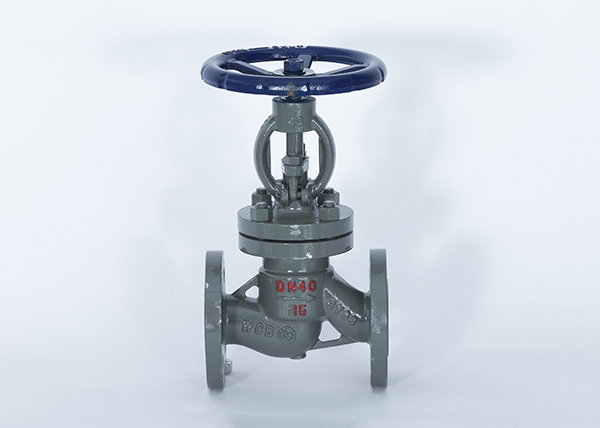
Selecting a valve is not only about size—it is about process compatibility.
Check:
Acid type
Concentration
Oxidizing strength
Ensure valve is rated for:
Operating pressure
Temperature cycles
System spikes
Determine:
Required flow stability
Throttling needs
Pressure drop sensitivity
Options include:
Manual handwheel
Pneumatic actuator
Electric actuator
High-end applications require:
Ultra-clean manufacturing
Low particle emission
Cleanroom packaging
✔ Chemical compatibility verified
✔ Temperature range confirmed
✔ Flow control requirement defined
✔ Installation orientation checked
✔ Purity specification confirmed
Proper installation ensures long-term reliability.
Ensure correct flow direction
Avoid pipe stress on valve body
Maintain alignment between flanges
Use compatible gasket materials
Regular sealing inspection
Check stem smoothness
Monitor leakage signs
Clean external contamination
Using stop valve as isolation valve
Over-tightening connections
Ignoring chemical compatibility
Incorrect actuator sizing
Most failures I have seen are caused by improper selection or installation, not manufacturing defects.
It is used to regulate and stop flow in high purity and corrosive chemical systems.
Yes, they are widely used for strong acids such as sulfuric acid, nitric acid, and hydrochloric acid.
Stop valves are used for flow regulation, while gate valves are mainly for full open or close isolation.
Because it provides excellent corrosion resistance and ultra-high purity performance.
They are widely used in semiconductor, pharmaceutical, chemical processing, and electronics industries.
From my engineering experience in fluoropolymer systems, a PFA stop valve for high purity chemical processing applications plays a crucial role in maintaining stable, safe, and clean fluid control.
It is not just a valve—it is a key control element that directly affects product quality and system reliability.
At Jiangsu JIECHUANG New Materials Co., Ltd., we continue to develop advanced fluoropolymer valves and integrated chemical system solutions for global high-tech industries.
Address: No. 1 Jingpohu Road, Suqian-Suzhou Industrial Park, Suqian City, Jiangsu Province
Xu Hao: 13813955525
Xu Gang: 15189058237
E-mail: zhaojiguang@jsjcxcl.com.cn


Copyright © 2023 Jiangsu Jiechuang New Materials Co., Ltd sitemap
This website uses cookies to ensure you get the best experience on our website.

 Pусский
 日本語
日本語 한국어
한국어 हिन्दी



 WhatsApp
 Phone
Phone