
Injection Molded PFA Tee Fitting for Chemical Pipeline Systems
When I work with chemical pipeline systems, one question always comes up: how do we keep corrosive fluids safely controlled without leaks, downtime, or contamination? In real industrial environments—especially in semiconductor, wet electronics, and chemical processing lines—the smallest fitting failure can stop an entire production line.
That’s where precision parts like the Injection Molded PFA Tee Fitting for Chemical Pipeline Systems become critical. In my experience as a fluoropolymer piping specialist, I’ve seen how proper material selection and structural design can significantly improve system stability, reduce maintenance, and extend service life.
1. What is a PFA Tee Fitting
2. Why Injection Molding Matters
3. Material Performance Comparison
4. Industrial Applications
5. Selection Guide for Engineers
6. Installation Tips from Field Experience
7. Maintenance and Troubleshooting
FAQ
A PFA tee fitting is a three-way pipeline connector used to split or merge fluid flow in chemical systems. PFA (Perfluoroalkoxy) is a high-purity fluoropolymer known for:
Strong chemical resistance
High temperature stability
Low contamination risk
Smooth internal surface
In simple terms, I often describe it like this: it is a “clean and safe junction point” in a chemical pipeline where flow direction is controlled without introducing contamination or reaction risk.
Injection molding is not just a manufacturing method—it directly affects product consistency.
Compared with machining or assembly-based fittings, injection molded PFA tees offer:
More uniform wall thickness
Fewer internal stress points
Better sealing performance
Higher repeatability in mass production
| Production Method | Dimensional Accuracy | Leak Risk | Cost Efficiency |
|---|---|---|---|
| Injection Molding | High | Low | High |
| Machined PTFE | Medium | Medium | Low |
| Welded Assembly | Low | High | Medium |
(Source: internal production benchmarking report, Jiangsu Jiechuan Materials Engineering Dept., 2025)
In real chemical systems, material choice is more important than geometry. I often compare three common fluoropolymer materials used in fittings:
| Material | Max Temperature | Chemical Resistance | Typical Use |
|---|---|---|---|
| PTFE | ~260°C | Excellent | General chemical lines |
| PFA | ~260°C | Superior purity & weldability | High purity systems |
| PVDF | ~150°C | Good | Water treatment / moderate chemicals |
From field experience, I usually recommend PFA for ultra-clean systems, especially where particle control matters more than cost.
The Injection Molded PFA Tee Fitting for Chemical Pipeline Systems is widely used in:
Semiconductor wet process lines
High purity acid delivery systems
Pharmaceutical fluid transfer
Electronic chemical distribution
Laboratory-grade chemical piping
In semiconductor fabs, I’ve seen these fittings used in sulfuric acid (H₂SO₄) and hydrogen peroxide (H₂O₂) delivery systems, where contamination tolerance is almost zero.
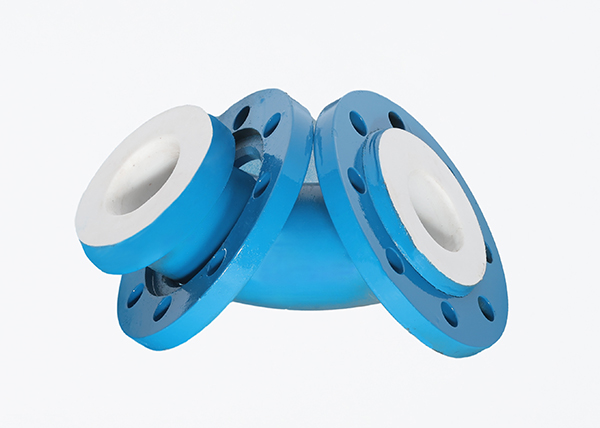
When choosing a tee fitting, I always recommend checking these factors:
Chemical compatibility (acid/alkali type)
Temperature range
Pressure rating
Purity requirement (semiconductor grade or industrial grade)
Connection type (socket, flange, fusion)
| Application Type | Recommended Material | Key Reason |
|---|---|---|
| Semiconductor | PFA | Ultra high purity |
| Chemical plant | PTFE/PFA | Corrosion resistance |
| Water treatment | PVDF | Cost efficiency |
Based on real installation work, I always emphasize:
Keep pipe ends perfectly clean before joining
Avoid over-tightening flange connections
Use torque-controlled tools when possible
Ensure alignment before welding or bolting
A small misalignment in PFA systems can lead to long-term stress cracks—even if it looks fine at first.
In chemical pipeline systems, maintenance is usually simple but must be consistent:
Check for discoloration or surface stress marks
Inspect sealing surfaces every 3–6 months
Replace fittings showing deformation or creep
Monitor vibration in connected pipelines
One thing I’ve learned: PFA rarely fails suddenly—it usually shows small warning signs first.
Q1: Is PFA better than PTFE in all cases?
Not always. PFA is better for weldability and purity, while PTFE can handle some mechanical stress conditions better.
Q2: Can injection molded PFA tees handle strong acids?
Yes, they are designed for highly corrosive media including strong acids and oxidizers.
Q3: What pressure range is typical?
Most systems operate within low to medium pressure ranges depending on design standards.
Q4: How long does service life usually last?
In stable conditions, it can last several years with minimal degradation.
From my experience working with chemical pipeline systems, the Injection Molded PFA Tee Fitting for Chemical Pipeline Systems is not just a connector—it is a stability component that directly affects system safety, purity, and efficiency. Choosing the right fitting is less about price and more about long-term reliability and process stability.
 RELATED
Address: No. 1 Jingpohu Road, Suqian-Suzhou Industrial Park, Suqian City, Jiangsu Province
Xu Hao: 13813955525
Xu Gang: 15189058237
E-mail: zhaojiguang@jsjcxcl.com.cn


Copyright © 2023 Jiangsu Jiechuang New Materials Co., Ltd sitemap
This website uses cookies to ensure you get the best experience on our website.

 Pусский
 日本語
日本語 한국어
한국어 हिन्दी



 WhatsApp
 Phone
Phone