
How PTFE-Lined Equipment Improves Corrosion Resistance in Chemical Plants
Why do chemical plants spend millions of dollars every year replacing corroded equipment?
If you work in chemical processing, semiconductor manufacturing, electronic chemicals, or specialty gas production, you already know that corrosion is more than just a maintenance issue. It can cause production interruptions, product contamination, safety hazards, environmental risks, and significant financial losses.
Over the years, I have worked closely with customers who struggled with equipment failures caused by aggressive chemicals such as sulfuric acid, hydrochloric acid, nitric acid, hydrofluoric acid, and various organic solvents. In many cases, switching to PTFE-lined equipment solved problems that conventional materials could not handle.
Today, PTFE-lined equipment has become one of the most trusted corrosion-resistant solutions in modern chemical plants. In this article, I will explain how PTFE lining works, why it offers superior protection, where it is commonly used, and how chemical manufacturers can maximize its benefits.
Understanding Corrosion in Chemical Plants
What Is PTFE-Lined Equipment?
Why PTFE Provides Superior Corrosion Resistance
PTFE-Lined Equipment vs Traditional Materials
Applications of PTFE-Lined Equipment in Chemical Plants
How to Choose the Right PTFE-Lined Equipment
Why Jiangsu Jiexin New Material Is a Trusted Partner
Frequently Asked Questions
Corrosion is one of the biggest challenges in industrial processing environments.
Chemical plants routinely handle:
Strong acids
Strong alkalis
Oxidizing agents
Corrosive gases
High-temperature liquids
When equipment surfaces react with these substances, corrosion begins.
The consequences can include:
Reduced equipment lifespan
Product contamination
Increased maintenance costs
Unplanned downtime
Safety incidents
According to industry corrosion studies, corrosion-related costs account for approximately 3–4% of industrial GDP in many developed economies.
For chemical manufacturers, preventing corrosion is not simply about protecting equipment—it is about protecting the entire operation.
PTFE-lined equipment refers to industrial equipment that combines the mechanical strength of steel with the exceptional chemical resistance of PTFE (Polytetrafluoroethylene).
The structure is straightforward:
Carbon steel or stainless steel provides structural strength.
PTFE lining creates a protective barrier between chemicals and metal surfaces.
This combination delivers the best of both worlds.
Common PTFE-lined equipment includes:
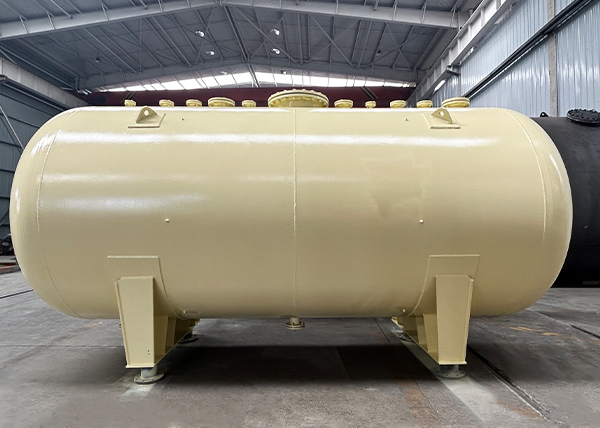
Storage tanks
Reactors
Pipes
Valves
Fittings
Heat exchangers
Evaporators
Scrubbers
Instead of allowing chemicals to contact metal directly, PTFE lining acts as an inert shield.
As a result, corrosion is significantly reduced or completely eliminated.
The unique molecular structure of PTFE makes it one of the most chemically stable materials available.
PTFE resists nearly every industrial chemical.
It performs exceptionally well against:
Sulfuric acid
Hydrochloric acid
Nitric acid
Hydrofluoric acid
Chlorine compounds
Organic solvents
This broad compatibility is one reason PTFE-lined equipment is widely used in chemical plants.
PTFE does not easily react with chemicals.
Unlike many metals, it remains stable even when exposed to aggressive process media.
PTFE can operate continuously at temperatures up to approximately 260°C (500°F).
This allows chemical plants to maintain protection even in demanding processing conditions.
PTFE minimizes chemical penetration and protects the underlying steel structure.
This greatly extends equipment service life.
Many buyers ask whether PTFE-lined equipment is worth the investment compared to stainless steel or plastic systems.
Let's compare.
| Material | Corrosion Resistance | Chemical Compatibility | Typical Service Life |
|---|---|---|---|
| PTFE-Lined Steel | Excellent | Excellent | 15-25+ Years |
| Stainless Steel 316L | Moderate | Moderate | 5-15 Years |
| FRP | Good | Good | 8-15 Years |
| PVC | Moderate | Limited | 5-10 Years |
| Polypropylene | Good | Good | 8-12 Years |
Source: NACE Corrosion Engineering Handbook and ASTM Material Performance References.
PTFE-lined equipment consistently outperforms traditional materials in highly corrosive environments.
| Chemical | PTFE | Stainless Steel | PVC |
|---|---|---|---|
| Sulfuric Acid | Excellent | Fair | Good |
| Hydrochloric Acid | Excellent | Poor | Good |
| Nitric Acid | Excellent | Good | Fair |
| Hydrofluoric Acid | Excellent | Poor | Poor |
| Sodium Hydroxide | Excellent | Good | Good |
Source: Chemical Resistance Guide for Fluoropolymers and Industrial Materials.
The data clearly demonstrates why PTFE-lined equipment remains the preferred choice for severe chemical service.
Many acids rapidly attack metal tanks.
PTFE-lined storage tanks safely contain corrosive chemicals while preserving structural integrity.
Pipelines continuously transport aggressive process fluids.
PTFE-lined piping systems prevent corrosion and leakage.
Chemical reactions often involve extreme conditions.
PTFE-Lined Reactors maintain both safety and process stability.
Conventional heat exchangers can suffer from corrosion-related failures.
PTFE-lined heat exchangers provide reliable thermal performance.
PTFE-lined evaporators are widely used for:
Acid concentration
Chemical recycling
Waste minimization
Many chemical plants generate corrosive exhaust streams.
PTFE-lined scrubbers and absorption towers improve durability and environmental compliance.
| Equipment Type | Application | Main Benefit |
|---|---|---|
| Storage Tank | Acid Storage | Corrosion Protection |
| Pipeline | Chemical Transfer | Leak Prevention |
| Reactor | Chemical Synthesis | Equipment Reliability |
| Heat Exchanger | Heat Transfer | Longer Service Life |
| Evaporator | Acid Recovery | Improved Efficiency |
| Scrubber | Exhaust Treatment | Corrosion Resistance |
Source: Industry application data from chemical processing projects and fluoropolymer equipment manufacturers.
Not all PTFE-lined equipment is manufactured to the same standard.
Here are the key factors I recommend evaluating.
The PTFE lining should have:
Uniform thickness
Strong adhesion
No visible defects
Reliable welding quality
Choose manufacturers capable of:
Custom engineering
Process optimization
System integration
Experience matters, especially for complex chemical applications.
Suppliers serving semiconductor and electronic chemical industries often maintain stricter quality standards.
Reliable manufacturers perform:
Pressure testing
Spark testing
Thickness inspection
Leak testing
Technical support is essential for long-term equipment performance.
At Jiangsu Jiexin New Material Co., Ltd., we specialize in PTFE-lined equipment and process system solutions.
Since our establishment in 2019, we have grown into a professional manufacturer serving customers worldwide.
Our facilities include:
30,000㎡ production workshop
3,500㎡ clean workshop
1,000㎡ product research laboratory
Our team consists of:
More than 400 employees
Over 150 technical professionals
Our core products include:
PTFE-lined storage tanks
PTFE piping systems
PTFE valves and fittings
Steel-lined plastic transportation tanks
We also provide complete engineering services for:
Semiconductor projects
Electronic chemical systems
Specialty gas systems
Display panel manufacturing
Photovoltaic industries
Through years of technical development, we have established mature engineering capabilities, complete process packages, and turnkey project solutions that help customers improve safety, efficiency, and reliability.
Based on our engineering experience, I recommend the following practices:
Even highly durable PTFE-lined equipment should be inspected periodically.
Avoid operating outside recommended pressure and temperature ranges.
Use PTFE-Lined Valves, fittings, and piping together for optimal performance.
Proper design and fabrication are critical to long-term success.
Choosing scalable systems can reduce future upgrade costs.
Under proper operating conditions, PTFE-lined equipment often provides service lives exceeding 15 to 25 years.
Yes. PTFE is one of the few industrial materials with excellent resistance to hydrofluoric acid.
Absolutely. PTFE is widely used in semiconductor and electronic chemical industries because of its inert and non-contaminating properties.
Maintenance requirements are generally lower than those of conventional metal equipment, although regular inspections are still recommended.
Although initial costs may be higher, reduced corrosion, lower maintenance expenses, and longer service life often result in lower total ownership costs.
Corrosion remains one of the most costly challenges facing chemical plants today. Selecting the right materials can make the difference between reliable production and frequent operational disruptions.
PTFE-lined equipment offers exceptional corrosion resistance, outstanding chemical compatibility, long service life, and superior process purity. Whether used in storage tanks, reactors, piping systems, heat exchangers, evaporators, or exhaust gas treatment equipment, PTFE-lined solutions provide proven protection in some of the world's most demanding industrial environments.
As a professional PTFE equipment manufacturer, we continue helping customers in chemical processing, semiconductor manufacturing, and electronic chemical industries build safer, more efficient, and more reliable production systems through advanced fluoropolymer technology.
Address: No. 1 Jingpohu Road, Suqian-Suzhou Industrial Park, Suqian City, Jiangsu Province
Xu Hao: 13813955525
Xu Gang: 15189058237
E-mail: zhaojiguang@jsjcxcl.com.cn


Copyright © 2023 Jiangsu Jiechuang New Materials Co., Ltd sitemap
This website uses cookies to ensure you get the best experience on our website.

 Pусский
 日本語
日本語 한국어
한국어 हिन्दी



 WhatsApp
 Phone
Phone
Comment
(0)