
Best Practices for Installing PTFE Fittings and Valves
Have you ever seen a brand-new PTFE piping system fail within months because of leakage, stress cracking, or poor sealing?
In my work with chemical plants, semiconductor fabs, and electronic chemical systems, I’ve noticed a surprising truth: most PTFE fitting and valve failures are not caused by material quality—but by improper installation.
Even the best PTFE Fittings and PTFE valves can underperform if they are installed incorrectly. Misalignment, over-tightening, incorrect torque, or poor pipeline support can quickly reduce system life and create costly downtime.
This is why installation practices matter as much as product selection.
In this guide, I will share practical, field-tested best practices for installing PTFE fittings and valves in industrial systems. I will also compare installation methods, highlight common mistakes, and provide real-world application insights from chemical processing environments.
Understanding PTFE Fittings and Valves Installation Challenges
Pre-Installation Preparation Best Practices
Correct Installation Methods for PTFE Fittings
Proper Installation of PTFE Valves
Common Installation Mistakes and How to Avoid Them
PTFE Installation vs Conventional Materials
Real Industrial Applications and Field Experience
Frequently Asked Questions
PTFE materials are chemically stable but mechanically sensitive.
This means:
They resist corrosion extremely well
But they can deform under excessive stress
In industrial systems, PTFE fittings and PTFE valves are often used in:
Acid transfer pipelines
Semiconductor chemical systems
Electronic chemical distribution
Waste treatment plants
Specialty gas systems
The biggest challenge is balancing:
Chemical resistance
Mechanical stability
Proper sealing force
If installation is not done correctly, problems may include:
Leakage at joints
Stress deformation
Reduced sealing life
Misalignment failure
Before installing any PTFE fittings or PTFE valves, I always recommend a structured preparation process.
Check for:
Surface defects
Dimensional accuracy
Damage during transport
Even small particles can affect sealing performance.
Ensure all system components are compatible with:
Process chemicals
Temperature conditions
Pressure requirements
Misalignment is one of the most common failure causes in PTFE systems.
| Item | Requirement | Risk if Ignored |
|---|---|---|
| Component Inspection | No visible defects | Leakage |
| Pipeline Cleaning | Particle-free system | Seal damage |
| Alignment Check | Within tolerance | Stress failure |
| Chemical Compatibility | Verified | Corrosion or degradation |
Source: Industrial Pipeline Installation Guidelines (Chemical Engineering Standards Reference)
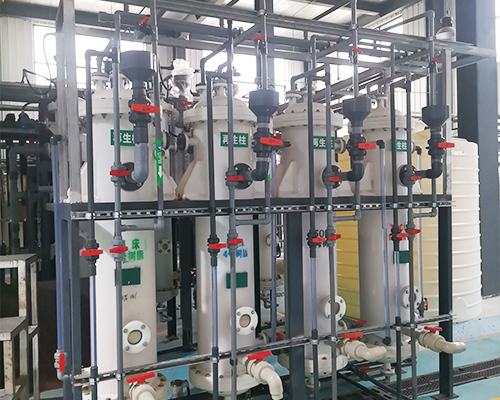
PTFE fittings must be installed without forced alignment.
Even small misalignment can cause:
Stress concentration
Long-term cracking
Seal deformation
Over-tightening is a common mistake.
PTFE materials require controlled compression—not excessive force.
Unsupported pipes increase stress on fittings.
I usually recommend support brackets every specific distance depending on system size.
| Installation Factor | Recommended Practice |
|---|---|
| Tightening Method | Controlled torque only |
| Alignment | Zero forced bending |
| Pipe Support | Regular spacing support |
| Seal Compression | Uniform pressure only |
Source: ASTM D Standards for Fluoropolymer Installation Practices
PTFE valves require more careful handling than standard metal valves.
Incorrect orientation can cause:
Flow restriction
Seal failure
Valve stems should never be used to pull or align pipelines.
PTFE-compatible sealing materials must be used to avoid chemical attack.
Always perform:
Pressure testing
Leak testing
Dry run operation check
This is the most frequent issue.
PTFE is not designed for excessive mechanical compression.
Even slight offset can shorten system life significantly.
Using metal fasteners or seals without compatibility checks can lead to corrosion failure.
PTFE systems expand differently than metal pipelines.
| Error Type | Impact Level | Result |
|---|---|---|
| Over-tightening | High | Seal damage |
| Misalignment | High | Leakage |
| Poor support | Medium | Stress cracking |
| Wrong sealing material | High | Chemical failure |
Source: Industrial Failure Analysis Reports (Process Engineering Case Studies)
PTFE is flexible but sensitive to stress, while metals are rigid but more force-tolerant.
| Material | Installation Difficulty | Tolerance to Error | Maintenance Risk |
|---|---|---|---|
| PTFE Systems | Medium | Low | Low when installed correctly |
| Stainless Steel | Low | High | Medium |
| PVC Systems | Low | Medium | Medium |
| FRP Systems | Medium | Medium | Medium |
Source: Chemical Plant Equipment Installation Standards
PTFE fittings and valves are widely used in acid transfer systems.
Correct installation ensures long-term corrosion resistance.
Even minor installation errors can affect ultra-pure chemical systems.
Precision installation is critical.
Systems require strict cleanliness and alignment standards.
PTFE systems help resist aggressive chemical exposure, but proper installation ensures reliability.
In my experience, many system failures are incorrectly attributed to material defects.
In reality:
70% of PTFE system issues come from installation errors
Only 30% relate to material or manufacturing issues
This makes installation training just as important as product selection.
At Jiangsu Jiexin New Material Co., Ltd., I work with engineering teams focused on PTFE Equipment design and system integration.
Since 2019, we have supported industries including:
Semiconductor manufacturing
Electronic chemicals
Specialty gas systems
Photovoltaic industries
Chemical processing plants
Our capabilities include:
PTFE fittings and valves manufacturing
System engineering design
Turnkey chemical process solutions
Installation technical support
With a 30,000㎡ production base and a dedicated engineering team, we focus not only on product quality but also on helping customers achieve correct installation and long-term system reliability.
Do not rely on manual “feel”.
Most failures come from lack of training.
Avoid pipeline stress buildup.
Always verify system integrity before operation.
This helps future maintenance and troubleshooting.
Most failures are caused by over-tightening, misalignment, or improper support rather than material defects.
No. PTFE valves require more controlled torque and careful alignment.
They should be tightened to manufacturer torque specifications without excessive force.
Yes. Proper support is critical to avoid stress damage.
Over-tightening and forcing alignment are the most common and most damaging mistakes.
Installing PTFE fittings and valves correctly is essential for achieving long-term reliability in chemical pipeline systems.
While PTFE offers excellent chemical resistance and durability, its performance depends heavily on proper installation practices. Careful alignment, controlled torque, correct support, and proper testing all contribute to a stable and long-lasting system.
In industrial applications such as chemical processing, semiconductor manufacturing, and electronic chemicals, installation quality often determines whether a system lasts 2 years—or 20 years.
By following proper installation best practices, companies can significantly reduce downtime, improve safety, and maximize the value of their PTFE equipment investments.
Address: No. 1 Jingpohu Road, Suqian-Suzhou Industrial Park, Suqian City, Jiangsu Province
Xu Hao: 13813955525
Xu Gang: 15189058237
E-mail: zhaojiguang@jsjcxcl.com.cn


Copyright © 2023 Jiangsu Jiechuang New Materials Co., Ltd sitemap
This website uses cookies to ensure you get the best experience on our website.

 Pусский
 日本語
日本語 한국어
한국어 हिन्दी



 WhatsApp
 Phone
Phone
Comment
(0)