
Stainless Steel Tower: A Complete Industrial Guide to Design, Performance, and Real-World Applications
Have you ever faced issues like corrosion inside a tower system, unstable separation efficiency, or rising maintenance costs in chemical processing equipment?
From my experience working with industrial storage systems and fluoropolymer-lined equipment, I’ve seen that choosing the right Tower design is one of the most critical decisions in chemical, petrochemical, and electronic chemical production. A poorly selected tower can lead to inefficiency, contamination, or even safety risks.
A stainless steel tower is widely used because it offers strong mechanical performance, long service life, and stable operation in demanding environments. However, depending on the chemical media, temperature, and process conditions, additional solutions like PTFE lining may be required.
In this article, I will share practical insights from real engineering projects, explain how a stainless steel tower works, compare different materials, and guide you through selection, operation, and maintenance in a simple and practical way.
On This Page
What Is a Stainless Steel Tower?
How a Tower System Works in Industrial Processing
Key Advantages of Stainless Steel Tower Design
Common Industrial Applications of Tower Systems
Stainless Steel Tower vs Other Materials
How I Select the Right Tower for a Project
Maintenance and Operational Best Practices
Frequently Asked Questions
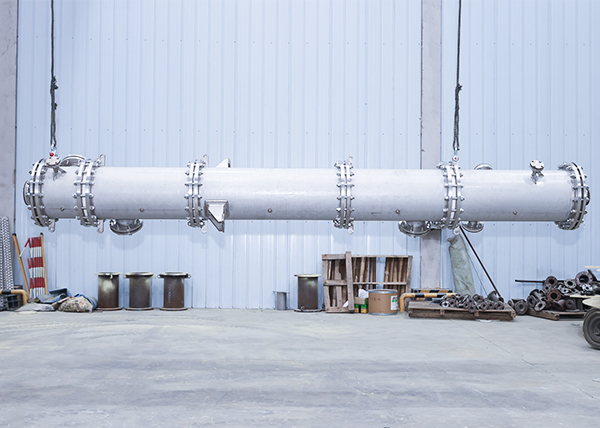
A stainless steel tower is a vertical industrial structure used for mass transfer, reaction, separation, or purification processes. It is widely used in chemical engineering systems where gas-liquid or liquid-liquid interaction is required.
A typical Tower system includes:
Tower shell (stainless steel body)
Internal trays or packing
Liquid distribution system
Gas inlet and outlet sections
Support structures
Depending on the process, the tower may also include structured packing, random packing, or trays to improve efficiency.
In my projects, stainless steel towers are often selected for their balance between strength, corrosion resistance, and cost efficiency.
A Tower works by increasing contact between two phases, usually gas and liquid.
Here is a simple explanation based on real engineering use:
Liquid flows downward inside the tower
Gas flows upward
Inside the tower, packing or trays increase contact area
Mass transfer happens during this contact
This is why towers are widely used in:
Absorption processes
Distillation systems
Stripping operations
Chemical reaction systems
The efficiency of a stainless steel tower depends heavily on internal design, not just the material itself.
Stainless steel provides excellent mechanical stability, especially under:
High pressure
High temperature
Continuous industrial operation
Depending on grade (304, 316, duplex), stainless steel towers can resist many industrial chemicals.
However, for highly corrosive media, I often recommend PTFE-lined systems for better protection.
A properly designed stainless steel tower can operate for decades with correct maintenance.
Stainless steel allows:
Welding
Custom shaping
Internal upgrades
This makes system optimization easier over time.
Used for:
Acid gas treatment
Solvent recovery
Chemical separation
Used in:
Refining processes
Hydrocarbon separation
Gas purification
High-purity environments require:
Clean separation systems
Low contamination risk
Used in:
Waste gas treatment
Scrubber systems
Emission control
Applied in:
Gas cleaning
Heat exchange processes
Below is a practical comparison based on engineering data and industrial field experience.
| Material | Strength | Corrosion Resistance | Temperature Resistance | Cost Level |
|---|---|---|---|---|
| Carbon Steel | High | Medium | High | Low |
| Stainless Steel 304 | High | Good | High | Medium |
| Stainless Steel 316 | High | Very Good | High | Higher |
| PTFE-Lined Steel Tower | High | Excellent | High | Highest |
Source: Industrial chemical equipment design standards and manufacturer engineering data (ASM, chemical process equipment references).
| Tower Type | Average Service Life |
|---|---|
| Carbon Steel Tower | 10–15 years |
| Stainless Steel Tower | 20–30 years |
| PTFE-Lined Tower | 25–35+ years |
Source: Industrial equipment lifecycle studies from chemical engineering maintenance records and OEM operational data.
| Industry | Stainless Steel Tower | PTFE-Lined Tower |
|---|---|---|
| Petrochemical | Suitable | Excellent |
| Chemical Processing | Good | Excellent |
| Semiconductor Chemicals | Limited | Excellent |
| Waste Gas Treatment | Good | Excellent |
Source: Fluoropolymer engineering application guides and industrial process design references.
When I design or recommend a Tower system, I always start with real process conditions.
I ask:
Is the chemical corrosive?
Is it high purity?
Does it contain solids or impurities?
Key parameters include:
Temperature range
Pressure level
Flow rate
Options include:
Random packing (low cost, flexible)
Structured packing (high efficiency)
Tray systems (stable operation)
This is where stainless steel or PTFE-lined solutions are chosen.
For aggressive chemicals, I often recommend solutions similar to those used in Jiangsu Jiexin New Material Co., Ltd. systems.
I always balance:
Initial investment
Maintenance cost
Downtime risk
A cheaper tower is not always more cost-effective long term.
Even a high-quality stainless steel tower requires proper maintenance.
Check:
Weld joints
Internal corrosion
Packing condition
Unstable pressure often indicates:
Blockage
Fouling
Flow imbalance
Depending on process type:
Water flushing
Chemical cleaning
Steam cleaning
In my experience, preventive maintenance reduces downtime by more than 30%.
It is used for separation, purification, and chemical reaction processes in industries such as chemical, petrochemical, and environmental engineering.
Stainless steel offers good general corrosion resistance, while PTFE-lined towers provide superior protection against highly corrosive chemicals.
Typically 20–30 years depending on operating conditions and maintenance.
Yes, but in many cases a lined structure is recommended for safety and durability.
Internal design, packing type, flow distribution, and operating conditions are more important than the shell material alone.
From my engineering experience, a stainless steel tower remains one of the most reliable and widely used solutions in industrial processing systems. Its strength, versatility, and long service life make it suitable for many applications, from petrochemical processing to environmental treatment.
However, when dealing with aggressive chemicals or high-purity requirements, upgrading to PTFE-lined systems can significantly improve safety and performance.
At Jiangsu Jiexin New Material Co., Ltd., we focus on providing advanced tower systems, fluoropolymer-lined equipment, and complete process engineering solutions for global industries. Our goal is to help customers achieve safer operation, higher efficiency, and longer equipment life.
A well-designed Tower is not just equipment—it is the core of stable industrial production.
Address: No. 1 Jingpohu Road, Suqian-Suzhou Industrial Park, Suqian City, Jiangsu Province
Xu Hao: 13813955525
Xu Gang: 15189058237
E-mail: zhaojiguang@jsjcxcl.com.cn


Copyright © 2023 Jiangsu Jiechuang New Materials Co., Ltd sitemap
This website uses cookies to ensure you get the best experience on our website.

 Pусский
 日本語
日本語 한국어
한국어 हिन्दी



 WhatsApp
 Phone
Phone