
Carbon Steel Storage Tank: A Complete Guide to Safe, Durable, and Cost-Effective Industrial Storage
Are you looking for a reliable storage solution for liquids, chemicals, petroleum products, or industrial materials while keeping costs under control?
As a manufacturer specializing in industrial storage equipment and PTFE-lined process systems, I often work with customers who need storage tanks that are strong, economical, and capable of operating safely for many years. One of the most commonly selected options is the carbon steel storage tank.
Despite the emergence of stainless steel and plastic tanks, carbon steel storage tanks remain widely used across chemical processing, petroleum, water treatment, food manufacturing, and environmental industries. Their excellent structural strength, cost-effectiveness, and design flexibility make them a practical choice for a wide range of applications.
In this guide, I will explain how a carbon steel storage tank works, where it is used, how to choose the right design, and what measures can help maximize its service life and safety.
On This Page
What Is a Carbon Steel Storage Tank?
Why Carbon Steel Storage Tanks Remain Popular
Key Design Considerations
Common Industrial Applications
Carbon Steel vs Other Storage Tank Materials
How I Choose the Right Carbon Steel Storage Tank
Maintenance and Corrosion Protection Tips
Frequently Asked Questions
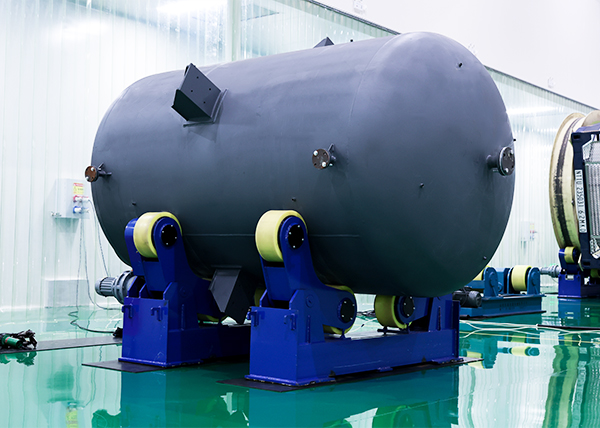
A carbon steel storage tank is an industrial vessel manufactured primarily from carbon steel and designed to store liquids, semi-liquids, and certain bulk materials.
These tanks are commonly available in:
Vertical storage tanks
Horizontal storage tanks
Atmospheric storage tanks
Pressure storage tanks
Transportation tanks
Depending on operating conditions, carbon steel storage tanks may also include:
Internal linings
Anti-corrosion coatings
Insulation systems
Heating jackets
Mixing systems
Because of their versatility, carbon steel tanks are widely used in industrial storage and transportation projects around the world.
Many customers ask me why carbon steel remains such a common material despite newer alternatives entering the market.
The answer is simple: carbon steel provides an excellent balance between strength, availability, and cost.
Carbon steel can withstand:
Large storage volumes
Heavy liquid loads
External mechanical impacts
Long-term industrial operation
This makes it suitable for both stationary and transport storage applications.
Compared with stainless steel and specialty alloy tanks, carbon steel tanks are generally more affordable.
For many industries, this translates into:
Lower initial investment
Faster project approval
Better return on investment
Carbon steel can be fabricated into various shapes and sizes, allowing manufacturers to customize tanks according to project requirements.
In my experience, successful carbon steel storage tank projects begin with proper design.
Several important factors must be considered.
The tank structure must safely withstand:
Liquid pressure
Product weight
Environmental loads
Transportation forces
Most large tanks use cylindrical or conical designs to distribute stress evenly.
One of the most important considerations is corrosion control.
Carbon steel naturally corrodes when exposed to certain chemicals and environmental conditions.
Common protection methods include:
Epoxy coatings
Rubber linings
PTFE linings
Glass flake coatings
Internal corrosion-resistant layers
For highly corrosive chemicals, I often recommend PTFE-lined solutions.
Modern carbon steel storage tanks commonly incorporate:
Pressure relief valves
Level monitoring systems
Leak detection devices
Emergency venting systems
These features help improve operational safety.
A well-designed storage tank should provide long-term value by balancing:
Manufacturing cost
Maintenance requirements
Operating efficiency
Service life
Carbon steel storage tanks are extensively used for:
Crude oil storage
Fuel storage
Lubricants
Petrochemical products
Applications include:
Raw material storage
Intermediate chemicals
Process liquids
Utility chemicals
When handling aggressive media, internal corrosion protection becomes especially important.
Water treatment plants frequently use carbon steel tanks for:
Raw water storage
Process water storage
Wastewater treatment systems
With appropriate coatings and hygienic design, carbon steel tanks can be used for certain food-related applications.
Storage tanks are widely used in:
Waste liquid collection
Chemical treatment systems
Environmental remediation projects
Selecting the right material is critical for project success.
| Material | Strength | Corrosion Resistance | Cost | Typical Applications |
|---|---|---|---|---|
| Carbon Steel | Excellent | Moderate | Low | Petroleum, water, industrial liquids |
| Stainless Steel | Excellent | Good to Excellent | High | Food, pharmaceutical, chemical |
| Polyethylene | Moderate | Good | Moderate | Water and mild chemicals |
| PTFE-Lined Steel | Excellent | Excellent | Higher | Strong acids and electronic chemicals |
Source: Industrial tank engineering manuals and chemical compatibility references.
| Tank Type | Typical Service Life |
|---|---|
| Carbon Steel Tank | 10–20 Years |
| Coated Carbon Steel Tank | 15–25 Years |
| Stainless Steel Tank | 20–35 Years |
| PTFE-Lined Tank | 20–30+ Years |
Source: Industry maintenance records and storage equipment lifecycle studies.
| Material | Relative Initial Cost |
|---|---|
| Carbon Steel | Low |
| Polyethylene | Medium |
| Stainless Steel | High |
| PTFE-Lined Steel | High |
Source: Global industrial equipment market data and manufacturer quotations.
Although carbon steel offers lower upfront costs, proper corrosion protection is essential for maximizing value.
Every storage application is different.
When helping customers select a carbon steel storage tank, I focus on several key factors.
Questions I ask include:
What chemical is being stored?
Is it corrosive?
Is it flammable?
Does it require purity control?
These answers determine whether internal lining protection is needed.
The tank should be sized according to:
Production volume
Storage frequency
Safety reserve requirements
Oversized tanks increase costs, while undersized tanks reduce operational efficiency.
Factors include:
Outdoor exposure
Humidity
Temperature fluctuations
Coastal environments
These conditions influence corrosion rates.
Depending on the project, compliance may involve:
ASME standards
API standards
Local environmental regulations
Pressure vessel requirements
Even the best-designed carbon steel storage tank requires regular maintenance.
Inspect:
Welds
Tank shell
Nozzles
Supports
Safety devices
Regular inspections help identify problems before they become expensive repairs.
Damaged coatings should be repaired immediately to prevent corrosion from spreading.
Track:
Temperature
Pressure
Product levels
Stable operating conditions improve reliability.
Moisture can accelerate corrosion.
Proper drainage and ventilation help protect tank integrity.
Periodic inspections by qualified technicians help ensure long-term performance and regulatory compliance.
Carbon steel storage tanks are commonly used for storing petroleum products, industrial liquids, water, chemicals, and process materials.
Carbon steel itself is vulnerable to corrosion. Protective coatings, linings, or PTFE systems are often used to improve corrosion resistance.
Depending on operating conditions and maintenance practices, service life typically ranges from 10 to 25 years or more.
Yes, but compatibility depends on the chemical being stored. Corrosion-resistant linings may be required for aggressive substances.
Absolutely. Capacity, dimensions, coatings, linings, insulation, and accessories can all be customized according to project requirements.
Based on my experience in industrial storage equipment manufacturing, the carbon steel storage tank remains one of the most practical and economical storage solutions available today. Its combination of strength, flexibility, and affordability makes it suitable for a wide range of industries, including petroleum, chemical processing, water treatment, and environmental protection.
At Jiangsu Jiexin New Material Co., Ltd., we manufacture customized carbon steel storage tanks, PTFE-Lined Equipment, transportation tanks, and turnkey chemical process systems. By combining advanced engineering capabilities with proven corrosion-protection technologies, we help customers achieve safe operation, extended service life, and long-term cost efficiency.
Address: No. 1 Jingpohu Road, Suqian-Suzhou Industrial Park, Suqian City, Jiangsu Province
Xu Hao: 13813955525
Xu Gang: 15189058237
E-mail: zhaojiguang@jsjcxcl.com.cn


Copyright © 2023 Jiangsu Jiechuang New Materials Co., Ltd sitemap
This website uses cookies to ensure you get the best experience on our website.

 Pусский
 日本語
日本語 한국어
한국어 हिन्दी



 WhatsApp
 Phone
Phone