
PTFE-lined Vertical Storage Tank: A Complete Industrial Guide for Safe Chemical Storage and Long-Term Performance
Have you ever struggled with selecting a storage tank that can safely handle highly corrosive chemicals while still maintaining long-term stability and low maintenance costs?
From my experience in designing and supplying fluoropolymer-lined equipment systems, this is one of the most common challenges faced by chemical, semiconductor, and pharmaceutical manufacturers. A standard steel tank often fails in corrosive environments, while plastic tanks may lack strength and durability.
That is why the PTFE-lined vertical storage tank has become a preferred solution in modern industrial systems. It combines the mechanical strength of steel with the outstanding chemical resistance of PTFE (polytetrafluoroethylene), making it suitable for highly aggressive media and demanding process conditions.
In this article, I will explain how these tanks work, where they are used, how to choose the right design, and what real engineering considerations matter most in long-term industrial operation.
On This Page
What Is a PTFE-Lined Vertical Storage Tank?
How PTFE-Lined Storage Tanks Work
Key Advantages of PTFE-Lined Vertical Storage Tanks
Industrial Applications and Real Use Cases
PTFE-Lined vs Other Storage Tank Materials
How I Select the Right PTFE-Lined Vertical Storage Tank
Maintenance and Operational Best Practices
Frequently Asked Questions
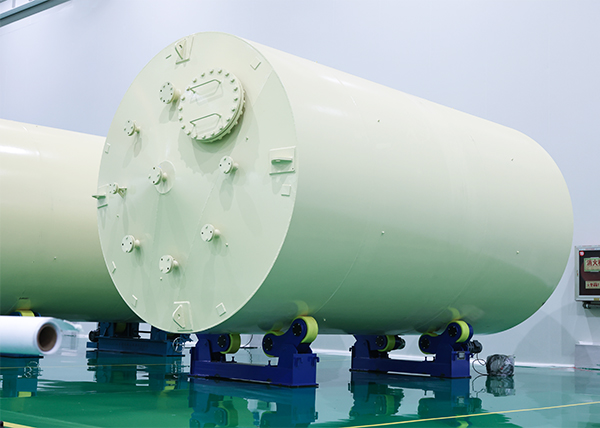
A PTFE-lined vertical storage tank is an industrial storage vessel designed with a carbon steel or stainless steel outer shell and an internal PTFE (fluorine polymer) lining.
In simple terms:
Steel provides strength and structural support
PTFE provides corrosion resistance and chemical protection
This combination allows the tank to handle aggressive chemicals that would normally damage standard metal equipment.
Typical structure includes:
Vertical cylindrical shell
PTFE lining layer
Nozzles and piping connections
Manholes and inspection ports
Optional heating or insulation systems
The working principle is simple but very effective.
When corrosive liquid enters the PTFE-lined vertical storage tank:
PTFE lining acts as a protective barrier
Chemical media does not directly contact steel
Structural stress is carried by the outer shell
Internal corrosion is completely prevented
This design ensures long-term stability even under harsh chemical conditions.
PTFE can resist:
Strong acids
Strong alkalis
Organic solvents
Oxidizing agents
Compared to traditional carbon steel tanks, PTFE-lined systems significantly reduce corrosion-related failures.
The steel shell ensures:
Pressure resistance
Mechanical durability
Long-term stability
By isolating chemicals from metal contact, the risk of contamination and leakage is minimized.
The tank can be customized for:
Capacity
Pressure conditions
Temperature range
Process requirements
Used for:
Acid storage
Alkali storage
Solvent handling
Intermediate chemical processing
Critical for:
High-purity chemical storage
Contamination-free processing
Ultra-clean system requirements
Used for:
API raw material storage
Reaction intermediates
High-purity liquid handling
Applied in:
Waste liquid treatment
Chemical neutralization systems
Effluent storage
Used for:
Corrosive additives
Process chemicals
Refining operations
| Material | Corrosion Resistance | Mechanical Strength | Cost Level | Typical Use |
|---|---|---|---|---|
| Carbon Steel | Low | High | Low | Non-corrosive liquids |
| Stainless Steel 316 | Medium | High | Medium | Mild chemical media |
| Glass-lined Tank | High | Medium | High | Acid storage |
| PTFE-Lined Tank | Very High | Very High | Higher | Strong corrosive chemicals |
Source: Industrial chemical equipment engineering standards and corrosion resistance databases.
| Tank Type | Average Service Life |
|---|---|
| Carbon Steel Tank | 10–15 years |
| Stainless Steel Tank | 20–30 years |
| Glass-lined Tank | 15–25 years |
| PTFE-Lined Vertical Storage Tank | 20–35+ years |
Source: Industrial equipment lifecycle studies and manufacturer maintenance records.
| Chemical Type | Stainless Steel | PTFE-Lined Tank |
|---|---|---|
| Hydrochloric Acid | Poor | Excellent |
| Sulfuric Acid | Medium | Excellent |
| Sodium Hydroxide | Medium | Excellent |
| Organic Solvents | Medium | Excellent |
Source: Fluoropolymer chemical resistance manuals and industrial application references.
In real engineering projects, I always start with process conditions instead of specifications.
I check:
Corrosiveness
Purity requirements
Reaction stability
Including:
Temperature range
Pressure level
Flow characteristics
Key factors:
Production capacity
Installation space
Expansion potential
For highly aggressive environments, I often recommend solutions similar to those developed by Jiangsu Jiexin New Material Co., Ltd..
Ensure compliance with:
Pressure vessel standards
Chemical safety regulations
Environmental protection requirements
Focus on:
Lining integrity
Weld seams
Nozzle connections
PTFE lining should not be scratched or impacted.
Excessive heat may affect lining performance.
Use compatible cleaning agents only.
Prolonged stagnation may affect system stability.
It is used for safe storage of highly corrosive chemicals in industries such as chemical processing, semiconductor, and pharmaceuticals.
PTFE offers significantly higher chemical resistance, especially against strong acids and alkalis.
Typically 20–35 years depending on operating conditions and maintenance.
Yes, within PTFE’s operational temperature range under proper engineering design.
Yes, tanks can be customized in size, structure, pressure rating, and connection design.
From my engineering experience, the PTFE-lined vertical storage tank is one of the most reliable solutions for modern industrial chemical storage. It successfully combines mechanical strength and extreme corrosion resistance, making it suitable for the most demanding applications.
Whether used in chemical plants, semiconductor manufacturing, or pharmaceutical systems, this type of tank ensures safer operation, longer service life, and better process stability.
At Jiangsu Jiexin New Material Co., Ltd., we focus on delivering high-performance PTFE-lined storage tanks and integrated process solutions for global industries. Our goal is simple: safer systems, longer life, and higher efficiency in every project.
A well-designed PTFE-lined vertical storage tank is not just storage equipment—it is a key foundation for safe industrial production.
Address: No. 1 Jingpohu Road, Suqian-Suzhou Industrial Park, Suqian City, Jiangsu Province
Xu Hao: 13813955525
Xu Gang: 15189058237
E-mail: zhaojiguang@jsjcxcl.com.cn


Copyright © 2023 Jiangsu Jiechuang New Materials Co., Ltd sitemap
This website uses cookies to ensure you get the best experience on our website.

 Pусский
 日本語
日本語 한국어
한국어 हिन्दी



 WhatsApp
 Phone
Phone