
PTFE-Lined Horizontal Storage Tank: The Reliable Solution for Corrosive Chemical Storage
Have you ever experienced tank corrosion, product contamination, or unexpected maintenance costs when storing aggressive chemicals?
As a manufacturer specializing in PTFE-Lined Equipment, I often hear these concerns from customers in the chemical, semiconductor, pharmaceutical, and electronic chemical industries. Choosing the wrong storage tank can lead to safety risks, product loss, environmental issues, and costly downtime.
This is why many industrial facilities are turning to the PTFE-lined horizontal storage tank. Combining the structural strength of steel with the exceptional chemical resistance of PTFE (Polytetrafluoroethylene), these tanks provide a dependable solution for storing corrosive liquids, high-purity chemicals, acids, alkalis, solvents, and oxidizing agents.
In this article, I will share my experience with PTFE-lined horizontal storage tanks, explain their advantages, compare them with alternative storage solutions, and provide practical tips for selecting the right tank for your application.
On This Page
What Is a PTFE-Lined Horizontal Storage Tank?
Why PTFE Is the Preferred Lining Material
Key Advantages of PTFE-Lined Horizontal Storage Tanks
Common Industrial Applications
PTFE-Lined Tank vs Other Storage Tank Materials
How I Select the Right PTFE-Lined Horizontal Storage Tank
Maintenance and Operational Best Practices
Frequently Asked Questions
A PTFE-lined horizontal storage tank is a steel vessel designed with a corrosion-resistant PTFE lining bonded to its internal surface. The steel shell provides mechanical strength, while the PTFE lining protects the tank from chemical attack.
Horizontal tanks are commonly chosen when:
Installation space is limited
Lower tank height is required
Easier loading and unloading are preferred
Transportation and maintenance accessibility are important
The combination of steel and PTFE allows these tanks to handle highly corrosive chemicals that would quickly damage conventional storage equipment.
In my experience, PTFE remains one of the most trusted materials for chemical storage applications.
PTFE offers exceptional resistance to:
Strong acids
Strong alkalis
Oxidizing agents
Organic solvents
High-purity chemicals
Unlike many plastics, PTFE maintains its properties even under challenging operating conditions.
| Property | PTFE Performance |
|---|---|
| Chemical Resistance | Excellent |
| Temperature Resistance | Up to 260°C |
| Water Absorption | Near Zero |
| Surface Friction | Extremely Low |
| Contamination Risk | Very Low |
Because of these characteristics, PTFE-lined horizontal storage tanks are widely used where product purity and corrosion resistance are critical.
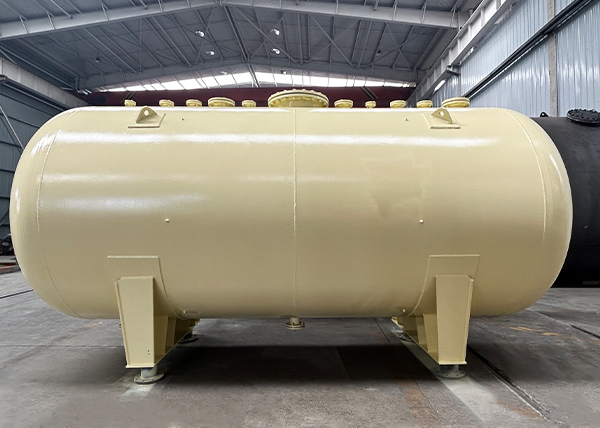
One of the primary reasons I recommend a PTFE-lined horizontal storage tank is its ability to resist aggressive chemicals.
These tanks can safely store:
Sulfuric acid
Hydrochloric acid
Nitric acid
Hydrofluoric acid
Electronic chemicals
Oxidizers
This protection significantly extends equipment life.
PTFE maintains its physical and chemical properties across a wide temperature range.
This makes the tank suitable for both ambient and elevated-temperature storage applications.
In semiconductor and electronic chemical production, contamination can lead to significant production losses.
PTFE's non-reactive surface helps maintain product quality during storage.
Horizontal tanks provide practical advantages:
Lower installation height
Easier transportation
Better accessibility
Flexible layout options
These benefits are particularly valuable in facilities with limited vertical space.
Because PTFE resists scaling and chemical attack, operators often experience:
Less downtime
Lower maintenance costs
Longer service intervals
Chemical facilities frequently store highly corrosive materials.
Applications include:
Acid storage
Alkali storage
Intermediate chemical storage
Process liquid containment
The semiconductor industry demands extremely clean process environments.
PTFE-lined horizontal storage tanks are commonly used for:
High-purity acids
Wet electronic chemicals
Specialty chemical storage
Chemical stability and contamination control are critical.
PTFE-lined tanks help maintain consistent product quality.
These tanks are widely used in:
Waste acid collection systems
Chemical treatment facilities
Hazardous liquid storage
PTFE-lined tanks provide reliable performance when handling aggressive additives and specialty process chemicals.
Selecting the right storage tank material is essential.
| Material | Corrosion Resistance | Strength | Temperature Resistance |
|---|---|---|---|
| Carbon Steel | Low | Excellent | High |
| Stainless Steel | Good | Excellent | High |
| Polyethylene (PE) | Moderate | Moderate | Low |
| PTFE-Lined Steel | Excellent | Excellent | Excellent |
Source: Industry material compatibility references and chemical equipment engineering data.
| Tank Type | Average Service Life |
|---|---|
| Carbon Steel Tank | 5–10 Years |
| Stainless Steel Tank | 8–15 Years |
| Plastic Tank | 5–12 Years |
| PTFE-Lined Tank | 15–25+ Years |
Source: Industrial Storage Tank lifecycle studies and manufacturer performance records.
| Chemical Type | Carbon Steel | Stainless Steel | PTFE-Lined Tank |
|---|---|---|---|
| Sulfuric Acid | Poor | Moderate | Excellent |
| Hydrochloric Acid | Poor | Limited | Excellent |
| Nitric Acid | Limited | Good | Excellent |
| Organic Solvents | Moderate | Good | Excellent |
Source: Published chemical resistance guides from fluoropolymer manufacturers and chemical engineering handbooks.
Every project has unique requirements.
When assisting customers, I focus on several important factors.
Before selecting a tank, I always evaluate:
Chemical composition
Concentration
Corrosiveness
Purity requirements
Tank capacity should match:
Daily consumption
Production volume
Safety reserve requirements
Temperature directly affects material selection and long-term performance.
PTFE is often preferred for elevated-temperature environments.
Consider:
Available floor space
Foundation requirements
Transportation access
Future expansion plans
Industry-specific regulations may influence tank design, inspection procedures, and certification requirements.
Although PTFE-lined horizontal storage tanks require less maintenance than many alternatives, regular inspections remain important.
Check for:
Surface damage
Valve condition
Connection integrity
Signs of leakage
Operators should monitor:
Temperature
Pressure
Filling levels
Maintaining stable operating conditions improves equipment lifespan.
Regular cleaning helps:
Maintain product purity
Prevent residue accumulation
Improve operational efficiency
Avoid impacts during transportation and installation that could affect the tank structure or lining system.
Periodic inspections by qualified personnel help identify potential issues before they become costly failures.
These tanks can safely store strong acids, alkalis, solvents, oxidizers, electronic chemicals, and many highly corrosive liquids.
Horizontal tanks require less height, offer easier access for maintenance, and are often more suitable for limited installation spaces.
With proper operation and maintenance, service life can exceed 15–25 years depending on operating conditions.
Yes. PTFE can continuously operate at temperatures up to approximately 260°C while maintaining excellent chemical resistance.
Absolutely. Capacity, dimensions, nozzle arrangements, support structures, and lining specifications can all be customized according to project requirements.
From my experience in fluoropolymer-lined equipment manufacturing, the PTFE-lined horizontal storage tank remains one of the most dependable solutions for storing corrosive and high-purity chemicals. Its combination of steel strength, exceptional corrosion resistance, temperature stability, and low maintenance requirements makes it ideal for demanding industrial applications.
At Jiangsu Jiexin New Material Co., Ltd., we design and manufacture customized PTFE-lined horizontal storage tanks, PTFE-lined vessels, chemical storage systems, and turnkey engineering solutions for customers worldwide. By combining advanced fluoropolymer technology with professional engineering expertise, we help businesses improve safety, extend equipment life, and achieve reliable long-term performance.
Address: No. 1 Jingpohu Road, Suqian-Suzhou Industrial Park, Suqian City, Jiangsu Province
Xu Hao: 13813955525
Xu Gang: 15189058237
E-mail: zhaojiguang@jsjcxcl.com.cn


Copyright © 2023 Jiangsu Jiechuang New Materials Co., Ltd sitemap
This website uses cookies to ensure you get the best experience on our website.

 Pусский
 日本語
日本語 한국어
한국어 हिन्दी



 WhatsApp
 Phone
Phone