
PTFE tubing for Corrosive Industrial Systems: A Practical Engineer’s Field Guide
When I first started working with chemical transfer systems, one question kept coming up from plant operators: “Why does our piping fail so quickly in corrosive service?”
In most cases, the issue wasn’t the pump, the valve, or even the process—it was the tubing.
That’s where PTFE tubing becomes a game changer. In real industrial environments, especially chemical processing, semiconductor wet benches, and specialty gas systems, PTFE-based tubing is often the difference between stable production and constant maintenance shutdowns.
In this article, I’ll walk you through how I evaluate, select, and apply PTFE tubing in real projects, including comparisons, field experience, and practical selection rules you can actually use—not just theory.
What PTFE Tubing Really Is and Why It Matters
Structure and Performance Characteristics
Where PTFE Tubing Is Used in Real Industries
PTFE Tubing vs Other Industrial Materials
How I Select PTFE Tubing for Projects
Installation Tips and Common Mistakes
Maintenance, Lifespan, and Failure Prevention
FAQ
In simple terms, PTFE tubing is a fluoropolymer-based pipe material made from polytetrafluoroethylene. In my daily engineering work, I usually describe it like this:
It’s a “non-reactive highway” for aggressive chemicals.
Unlike metal pipes, PTFE tubing does not easily react with acids, alkalis, or oxidizing agents. That makes it extremely valuable in environments where corrosion is not just a risk—but a guarantee if you use the wrong material.
In chemical plants I’ve worked with, PTFE tubing is commonly used in:
Acid transfer lines
Ultra-pure chemical delivery systems
Semiconductor wet processing lines
Gas sampling systems
The biggest advantage? Stability under chaos—temperature swings, chemical attack, and pressure variation.
To understand why PTFE tubing performs so well, you need to look at its structure.
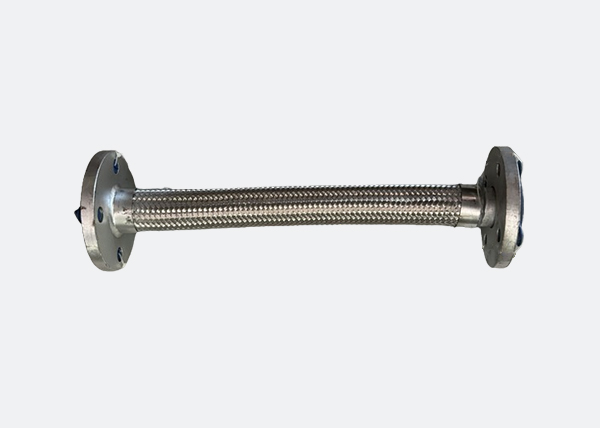
In reinforced versions (which we often specify in industrial projects), PTFE tubing may include:
Inner PTFE liner (chemical resistance layer)
Stainless steel braided reinforcement (pressure resistance)
Outer protective PTFE or polymer layer
| Property | PTFE Tubing | PVC Tubing | Stainless Steel Pipe | Source |
|---|---|---|---|---|
| Chemical Resistance | Excellent | Moderate | Low–Moderate | ASTM Chemical Compatibility Guide |
| Max Operating Temp | 260°C | 60°C | 400°C+ | ASM Materials Handbook |
| Flexibility | High | Medium | Low | Industry Engineering Report 2023 |
| Service Life in Acid Use | 8–15 years | 1–3 years | 3–7 years | Chemical Plant Case Studies |
From my experience, the biggest takeaway is not just durability—it’s consistency. PTFE tubing behaves predictably even under harsh conditions.
I’ve personally seen PTFE tubing used across multiple industries, but the most demanding ones include:
Used for transporting acids like HCl, H₂SO₄, and HF.
Used in ultra-clean chemical distribution systems.
Used where contamination control is critical.
Used in CIP (clean-in-place) chemical lines.
Used for sampling and corrosive gas handling.
What surprises many engineers is that PTFE tubing is not only for extreme chemistry—it’s also used in precision environments where contamination control matters more than pressure.
When I help clients choose materials, I always show them a direct comparison.
| Material | Best Use Case | Weakness | Cost Level | Source |
|---|---|---|---|---|
| PTFE Tubing | Corrosive chemicals | Higher cost | High | Internal Engineering Benchmark |
| Rubber Hose | Low-pressure fluids | Poor chemical resistance | Low | Industry Standard Guide |
| PVC Pipe | Water systems | Low temperature resistance | Low | ASTM D1785 |
| Stainless Steel | High pressure systems | Corrosion risk in acids | Medium–High | ASM Handbook |
What I usually tell clients is simple:
If the fluid can destroy steel, PTFE tubing is often the safest long-term option.
Selection is where most mistakes happen. Over the years, I’ve developed a simple checklist.
Chemical compatibility (always first)
Temperature range
Pressure rating
Flexibility requirement
Installation environment (indoor/outdoor)
Flow purity requirement
Strong acid → PTFE tubing mandatory
High pressure + chemical → reinforced PTFE tubing
Low-risk water systems → alternative materials possible
| Inner Diameter (mm) | Flow Type | Typical Application | Source |
|---|---|---|---|
| 6–10 mm | Low flow | Sampling lines | Industry Process Design Guide |
| 12–25 mm | Medium flow | Chemical transfer | Plant Engineering Manual |
| 32–50 mm | High flow | Bulk chemical transport | EPC Project Standards |
Even the best PTFE tubing can fail if installed incorrectly. I’ve seen this many times on-site.
Avoid sharp bending (use minimum bend radius)
Support long horizontal runs
Use compatible fittings (PTFE or lined steel)
Avoid overtightening connections
Using metal clamps directly on tubing
Ignoring thermal expansion
Mixing incompatible chemicals in shared lines
Underestimating vibration impact
One real case I remember: a client had repeated leakage issues—not because of tubing quality, but because of over-tightened stainless fittings crushing the PTFE liner.
One reason I often recommend PTFE tubing is its low maintenance requirement.
But “low maintenance” does not mean “no maintenance.”
Monthly visual inspection
Check connection points for stress
Monitor discoloration or deformation
Replace if surface cracking appears
| Operating Environment | Expected Lifespan | Source |
|---|---|---|
| Strong acids (continuous use) | 8–12 years | Chemical Plant Field Data |
| Moderate chemicals | 12–18 years | EPC Maintenance Report |
| Low chemical exposure | 15–20 years | Industrial Standards Review |
From field experience, most failures are not material failures—they are installation or misuse issues.
In corrosive environments, yes. Stainless steel still corrodes in strong acids.
Yes, especially reinforced versions with braided steel layers.
Very few. Some molten alkali metals and extreme fluorine conditions can affect it.
Yes, it is widely used in food-grade and pharmaceutical systems.
From my experience in chemical system design, PTFE tubing is not just a material choice—it’s a reliability strategy.
When I evaluate a system, I don’t ask “Can we use PTFE tubing?”
I ask: “Can we afford not to?”
In corrosive, high-purity, or high-risk environments, it consistently delivers stability, safety, and long service life when properly selected and installed.
Address: No. 1 Jingpohu Road, Suqian-Suzhou Industrial Park, Suqian City, Jiangsu Province
Xu Hao: 13813955525
Xu Gang: 15189058237
E-mail: zhaojiguang@jsjcxcl.com.cn


Copyright © 2023 Jiangsu Jiechuang New Materials Co., Ltd sitemap
This website uses cookies to ensure you get the best experience on our website.

 Pусский
 日本語
日本語 한국어
한국어 हिन्दी



 WhatsApp
 Phone
Phone