
PTFE Straight Tube: High-Performance Corrosion-Resistant Piping for Industrial Chemical Systems
Have you ever dealt with pipeline failures caused by corrosion, leakage, or material degradation in harsh chemical environments?
From my experience working with industrial fluid transport systems, I can say that this is one of the most common and costly problems in chemical production. Traditional metal pipes often fail when exposed to strong acids, alkalis, or high-purity chemical media.
That is where the PTFE straight tube becomes a game-changer.
In real industrial engineering, PTFE-lined piping systems combine the strength of steel with the chemical resistance of fluoropolymer materials. This makes them ideal for long-term, stable operation in aggressive environments such as chemical processing, semiconductor manufacturing, and pharmaceutical production.
In this article, I will explain how PTFE straight tubes work, where they are used, how to select them correctly, and what practical engineering considerations matter most in real applications.
On This Page
What Is a PTFE Straight Tube?
How PTFE Straight Tubes Work in Industrial Systems
Key Advantages of PTFE-Lined Pipes
Industrial Applications and Real Use Cases
Material Comparison and Technical Tables
How I Select the Right PTFE Straight Tube
Installation and Maintenance Tips
Frequently Asked Questions
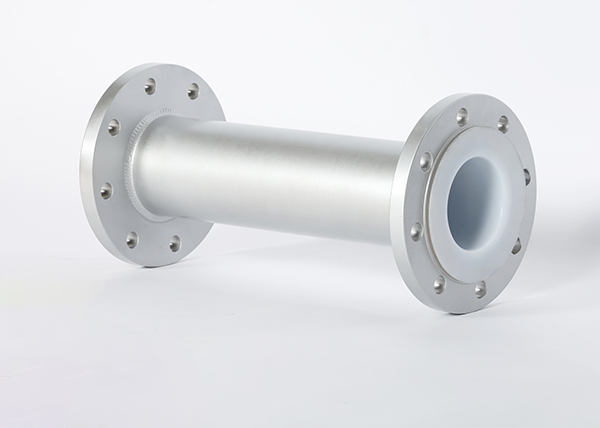
A PTFE straight tube (also called steel-lined PTFE pipe) is a composite industrial pipe made of:
Outer layer: carbon steel or stainless steel
Inner lining: PTFE (polytetrafluoroethylene)
In simple terms:
It is a high-strength pipe with a chemically inert inner surface.
This structure allows it to handle:
Highly corrosive liquids
High-purity chemical media
High and low temperature environments
The working principle is straightforward but very effective.
When chemical fluid flows through a PTFE straight tube:
Steel provides mechanical strength and pressure resistance
PTFE lining isolates the fluid from metal contact
Corrosion is completely prevented
Flow remains stable and uncontaminated
This dual-layer design ensures both safety and durability in harsh environments.
PTFE is resistant to:
Strong acids
Strong alkalis
Organic solvents
Oxidizing chemicals
Compared to standard metal pipes, PTFE-lined systems significantly reduce corrosion failure risk.
Steel outer layer ensures:
Pressure resistance
Structural stability
Impact durability
Fewer replacements and less downtime reduce overall operating costs.
Smooth PTFE inner surface reduces:
Scaling
Blockage
Flow resistance
Used for:
Acid and alkali transport
Solvent delivery systems
Reactor feed pipelines
Critical for:
Ultra-pure chemical transport
Contamination-free piping systems
Used for:
High-purity liquid transfer
API production pipelines
Used in:
Refining process lines
Corrosive media transport
Used for:
Waste liquid treatment systems
Chemical neutralization pipelines
| Pipe Type | Corrosion Resistance | Pressure Strength | Service Life | Cost Level |
|---|---|---|---|---|
| Carbon Steel Pipe | Low | High | Medium | Low |
| Stainless Steel Pipe | Medium | High | High | Medium |
| PVC Pipe | High | Low | Medium | Low |
| PTFE Straight Tube | Very High | Very High | Very High | Medium-High |
Source: Industrial piping system engineering reference data and corrosion resistance manuals
| Chemical Medium | Stainless Steel | PTFE Straight Tube |
|---|---|---|
| Hydrochloric Acid | Poor | Excellent |
| Sulfuric Acid | Medium | Excellent |
| Sodium Hydroxide | Medium | Excellent |
| Organic Solvents | Medium | Excellent |
Source: Fluoropolymer chemical compatibility charts and industrial application studies
| Industry | Recommended Pipe Type |
|---|---|
| Chemical Industry | PTFE Straight Tube |
| Semiconductor | High-Purity PTFE Lined Pipe |
| Pharmaceutical | PTFE Straight Tube |
| Water Treatment | PVC / PTFE Hybrid Systems |
Source: Industrial process pipeline design guidelines
In real engineering projects, I always start from process conditions, not product specifications.
I evaluate:
Corrosiveness
Purity level
Reaction behavior
Different systems require different structural thickness and reinforcement.
I check:
Flow rate
Viscosity
Particle content
For aggressive chemical environments, I often recommend solutions similar to systems produced by Jiangsu Jiexin New Material Co., Ltd..
A better pipe is not the cheapest one—it is the one with the lowest total lifecycle cost.
PTFE lining can be damaged if excessive force is applied.
Misalignment can cause leakage or stress concentration.
Check:
Joints
Lining condition
Corrosion points
Rapid temperature changes should be avoided.
Unstable flow increases wear risk over time.
It is used for transporting corrosive and high-purity chemical fluids in industrial systems.
PTFE offers much higher resistance to acids, alkalis, and solvents.
Typically 15–30 years depending on operating conditions.
Yes, the steel outer layer provides strong pressure resistance.
Chemical, semiconductor, pharmaceutical, and environmental industries.
From my engineering experience, the PTFE straight tube is one of the most reliable solutions for transporting aggressive chemical media. It successfully combines mechanical strength with outstanding corrosion resistance, solving many long-standing pipeline failure problems in industrial systems.
Whether in chemical plants, semiconductor fabs, or pharmaceutical production lines, this type of piping ensures safer operation, longer service life, and lower maintenance costs.
At Jiangsu Jiexin New Material Co., Ltd., we focus on delivering high-performance PTFE-lined piping systems designed for demanding global industrial applications.
In modern chemical engineering, a reliable pipeline is not just infrastructure—it is production security.
Address: No. 1 Jingpohu Road, Suqian-Suzhou Industrial Park, Suqian City, Jiangsu Province
Xu Hao: 13813955525
Xu Gang: 15189058237
E-mail: zhaojiguang@jsjcxcl.com.cn


Copyright © 2023 Jiangsu Jiechuang New Materials Co., Ltd sitemap
This website uses cookies to ensure you get the best experience on our website.

 Pусский
 日本語
日本語 한국어
한국어 हिन्दी



 WhatsApp
 Phone
Phone