
Hot Water Tank: Industrial Hot Water Storage Systems for Efficient Heating and Process Stability
Have you ever wondered why some industrial facilities maintain stable heating performance while others constantly struggle with heat loss, unstable temperature, or high energy consumption?
From my experience in industrial thermal systems and process equipment design, the answer often comes down to one core component: the hot water tank.
A hot water tank is not just a simple storage unit. In modern chemical plants, semiconductor facilities, food processing systems, and energy stations, it plays a critical role in thermal energy storage, process stability, and continuous operation support.
In this article, I will explain how a hot water tank works, where it is used, how to select the right system, and what practical engineering details truly matter in real industrial environments.
On This Page
What Is a Hot Water Tank?
How a Hot Water Tank Works in Industrial Systems
Types of Hot Water Tanks
Industrial Applications and Real Use Cases
Hot Water Tank Comparison and Performance Tables
How I Select the Right Hot Water Tank
Maintenance and Optimization Tips
Frequently Asked Questions
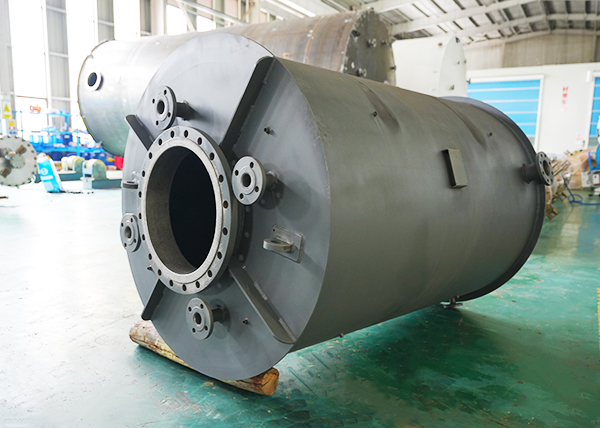
A hot water tank is an industrial or commercial storage system designed to store heated water for later use in process heating, cleaning, or energy systems.
In simple terms:
It works like a thermal buffer—storing heat when available and releasing it when needed.
A typical system includes:
Insulated steel tank body
Heating coils or external heat exchangers
Inlet and outlet piping
Temperature control system
Safety valves and sensors
The working principle is based on thermal energy storage.
When water is heated:
Heat energy is transferred into the tank
Water maintains stable temperature for extended periods
Insulation reduces heat loss
Controlled discharge supplies stable hot water flow
This ensures continuous operation even when heating sources fluctuate.
Heat is applied directly inside the tank
Fast heating response
Simple structure
Uses external heat exchanger or coil
Higher safety and efficiency
Better for chemical or industrial systems
Designed for high-pressure operation
Suitable for industrial process heating
Operates under normal pressure
Common in commercial and light industrial use
Used for:
Process heating support
Cleaning and rinsing systems
Reaction temperature stabilization
Used for:
Ultra-clean hot water supply
Process equipment cleaning
Temperature-controlled environments
Used for:
Sterilization
Pasteurization
Cleaning production lines
Used for:
Heat storage systems
Waste heat recovery
Boiler support systems
Used for:
Wastewater treatment heating
Chemical neutralization processes
| Type | Heating Speed | Efficiency | Safety Level | Cost |
|---|---|---|---|---|
| Direct Heating | High | Medium | Medium | Low |
| Indirect Heating | Medium | High | High | Medium |
| Pressurized Tank | Medium | High | Very High | High |
| Atmospheric Tank | Low | Medium | High | Low |
Source: Industrial thermal system engineering references and HVAC design standards
| Tank Type | Heat Loss Rate (24h) |
|---|---|
| Standard Steel Tank | 20–30% |
| Insulated Tank | 10–15% |
| High-Performance Industrial Tank | 5–8% |
Source: Industrial insulation performance testing data and thermal engineering studies
| Industry | Recommended Hot Water Tank Type |
|---|---|
| Chemical Processing | Indirect Heating Tank |
| Semiconductor | High-Purity Insulated Tank |
| Food Industry | Stainless Steel Hygienic Tank |
| Energy Systems | Pressurized Heat Storage Tank |
Source: Industrial process heating system design guidelines
In real engineering projects, I always focus on process demand first, not just equipment size.
I check:
Operating temperature range
Stability requirement
Heating source type
Based on:
Production volume
Peak usage demand
Buffer storage requirement
Different applications require different structural designs.
For corrosive or high-purity systems, I often consider solutions aligned with systems developed by Jiangsu Jiexin New Material Co., Ltd..
I evaluate:
Insulation performance
Heat recovery potential
Energy consumption balance
Ensures system stability and prevents energy waste.
Damaged insulation increases heat loss significantly.
Prevents scaling and contamination.
Essential for pressurized systems.
Avoid unnecessary energy consumption.
It stores and supplies heated water for industrial, commercial, or process use.
Chemical, semiconductor, food processing, energy, and environmental industries.
Indirect heating and well-insulated industrial tanks offer the best efficiency.
Typically 10–25 years depending on design and maintenance.
Yes, capacity, pressure rating, and materials can all be customized.
From my experience in industrial thermal system design, a hot water tank is far more than a storage container—it is a key part of energy management and process stability.
Whether used in chemical production, semiconductor manufacturing, or food processing, a properly designed hot water tank ensures consistent temperature supply, energy efficiency, and safe operation.
At Jiangsu Jiexin New Material Co., Ltd., we focus on delivering reliable, high-performance industrial systems that support demanding global applications.
In modern industry, stable heat is not a luxury—it is a requirement.
Address: No. 1 Jingpohu Road, Suqian-Suzhou Industrial Park, Suqian City, Jiangsu Province
Xu Hao: 13813955525
Xu Gang: 15189058237
E-mail: zhaojiguang@jsjcxcl.com.cn


Copyright © 2023 Jiangsu Jiechuang New Materials Co., Ltd sitemap
This website uses cookies to ensure you get the best experience on our website.

 Pусский
 日本語
日本語 한국어
한국어 हिन्दी



 WhatsApp
 Phone
Phone