
Heat Exchanger: Industrial Heat Transfer Systems for Efficient and Safe Process Control
Have you ever wondered why some industrial plants run smoothly with stable temperatures while others constantly face overheating, energy waste, or unstable product quality?
From my engineering experience in process equipment systems, the answer often comes down to one critical device: the heat exchanger.
A heat exchanger is not just a supporting component—it is the “energy control center” of many industrial systems. Whether in chemical production, semiconductor manufacturing, or food processing, it quietly determines how efficiently heat is managed and how stable the entire process runs.
In this article, I will explain how a heat exchanger works, where it is used, how to choose the right type, and what real-world engineering factors truly matter in long-term operation.
On This Page
What Is a Heat Exchanger?
How Heat Exchangers Work in Industrial Systems
Main Types of Heat Exchangers
Industrial Applications and Real Use Cases
Heat Exchanger Comparison and Performance Tables
How I Select the Right Heat Exchanger
Maintenance and Optimization Tips
Frequently Asked Questions
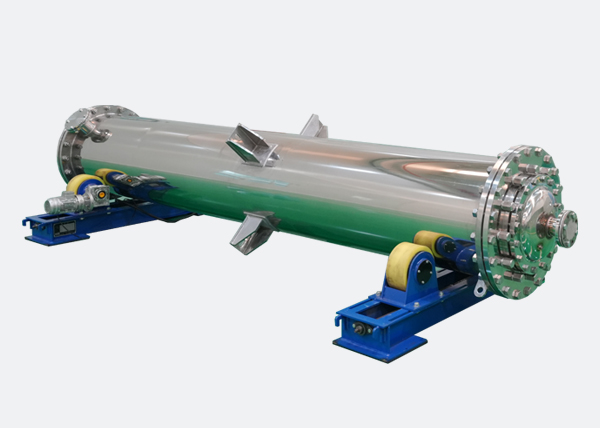
A heat exchanger is an industrial device used to transfer heat between two fluids without mixing them.
In simple terms:
It helps hot fluids cool down and cold fluids heat up—efficiently and safely.
A typical system includes:
Tube bundle or plate structure
Shell or frame
Inlet and outlet channels
Support and sealing components
The goal is simple: maximize heat transfer while minimizing energy loss.
The working principle is based on thermal energy transfer.
When two fluids flow through the system:
One hot fluid releases heat
One cold fluid absorbs heat
A solid wall separates them
Heat passes through the wall by conduction
This controlled energy exchange ensures stable process temperature without contamination.
Most widely used in heavy industry.
Strong structure
High pressure resistance
Easy maintenance
Compact and efficient design.
High heat transfer efficiency
Space-saving
Easy to expand
Best for viscous or dirty fluids.
Self-cleaning effect
Good for fouling media
Uses air instead of water.
Low water consumption
Suitable for remote areas
Used for:
Reactor temperature control
Condensation and evaporation
Process cooling and heating
Used in:
Refining processes
Heat recovery systems
Distillation units
Used for:
Pasteurization
Cooling and sterilization
Ingredient processing
Used for:
Temperature-sensitive reactions
Clean heat transfer systems
Used for:
Ultra-pure fluid temperature control
Stable process environment systems
| Type | Efficiency | Pressure Resistance | Maintenance | Cost |
|---|---|---|---|---|
| Shell & Tube | Medium | Very High | Easy | Medium |
| Plate Type | High | Medium | Easy | Medium |
| Spiral Type | Medium | Medium | Moderate | High |
| Air-Cooled | Low-Medium | High | Easy | High |
Source: Industrial Heat Transfer Engineering Handbook (process equipment design reference data)
| Type | Heat Transfer Coefficient (W/m²·K) |
|---|---|
| Shell & Tube | 500–1500 |
| Plate Heat Exchanger | 2000–6000 |
| Spiral Heat Exchanger | 800–2000 |
| Air-Cooled Heat Exchanger | 50–300 |
Source: Thermal Engineering Design Standards and Industry Application Reports
| Industry | Recommended Heat Exchanger Type |
|---|---|
| Chemical Processing | Shell & Tube / PTFE-lined Systems |
| Food Processing | Plate Heat Exchanger |
| Petrochemical | Shell & Tube |
| Semiconductor | High-Purity Plate System |
Source: Process Industry Equipment Selection Guidelines
In real engineering projects, I never start with product type first. I always start with process conditions.
I check:
Corrosiveness
Viscosity
Cleanliness level
Different systems require different mechanical strength levels.
Dirty fluids require self-cleaning or larger channel designs.
We calculate:
Required thermal load
Flow rate
Efficiency target
For corrosive systems, I often recommend fluoropolymer-based solutions similar to those produced by Jiangsu Jiexin New Material Co., Ltd..
Prevents scaling and fouling buildup.
A sudden drop in efficiency usually signals fouling.
Leakage can reduce system performance.
Stable flow improves heat transfer efficiency.
Rapid temperature changes may damage equipment.
It transfers heat between two fluids without mixing them.
Plate heat exchangers usually have the highest efficiency.
Yes, with proper material selection such as PTFE-lined systems.
Typically 10–25 years depending on operation and maintenance.
They are used in chemical, food, oil & gas, pharmaceutical, and semiconductor industries.
From my perspective as an engineer, a heat exchanger is not just a piece of equipment—it is a core energy management system that directly affects production stability, efficiency, and cost control.
Whether in heavy chemical plants or high-purity semiconductor systems, the right heat exchanger design ensures smooth thermal control and reliable operation.
At Jiangsu Jiexin New Material Co., Ltd., we focus on designing durable, high-efficiency heat transfer systems tailored for demanding industrial environments worldwide.
In modern industry, efficient heat transfer is not optional—it is essential.
Address: No. 1 Jingpohu Road, Suqian-Suzhou Industrial Park, Suqian City, Jiangsu Province
Xu Hao: 13813955525
Xu Gang: 15189058237
E-mail: zhaojiguang@jsjcxcl.com.cn


Copyright © 2023 Jiangsu Jiechuang New Materials Co., Ltd sitemap
This website uses cookies to ensure you get the best experience on our website.

 Pусский
 日本語
日本語 한국어
한국어 हिन्दी



 WhatsApp
 Phone
Phone