
Automatic Liquid Filling Machine Workstation for Industrial Use
In my experience working with industrial equipment projects, one of the most common bottlenecks in production is still the filling process. Whether you are handling chemicals, coatings, or food-grade liquids, manual filling often leads to inconsistency, leakage risk, and unnecessary labor costs.
That is exactly where an Automatic Liquid Filling Machine Workstation becomes essential. It is not just a single machine—it is a complete controlled system that ensures accuracy, safety, and repeatability in every filling cycle.
In this article, I will walk you through how this equipment works, where it is used, how to choose the right model, and what practical factors actually matter in real production environments.
What Is an Automatic Liquid Filling Machine Workstation
Core System Structure and Working Principle
Industrial Applications Across Different Sectors
Performance Comparison with Manual and Semi-Automatic Systems
How to Choose the Right Filling Machine Workstation
Practical Operation Tips from Industrial Use
Maintenance and Long-Term Stability
FAQ
An Automatic Liquid Filling Machine Workstation is an integrated industrial system designed to automatically measure, control, and fill liquid products into bottles, tanks, or containers.
From my practical view, its biggest value is simple:
Replace manual filling
Improve consistency
Reduce human error
Increase production speed
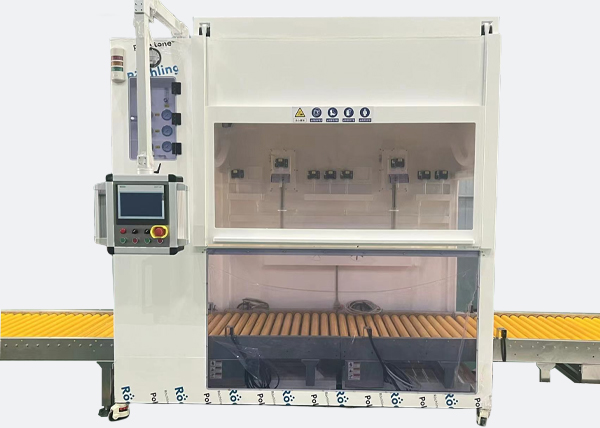
Unlike basic filling devices, a workstation version usually includes conveyor integration, multi-nozzle filling heads, and PLC control systems for precision management.
An Industrial Filling Workstation typically includes three major systems:
This system transports liquid from storage tanks into the filling unit. It may include pumps, valves, and flow meters.
This is the core section where measured liquid is dispensed into containers. Depending on design, it can use:
Gravity filling
Piston filling
Pump-driven filling
Modern machines use PLC + HMI interfaces to control:
Filling volume
Speed
Batch settings
Error alerts
| System Type | Filling Accuracy | Speed (bottles/min) | Labor Required |
|---|---|---|---|
| Manual Filling | ±5% | 10–20 | High |
| Semi-Automatic | ±2% | 20–60 | Medium |
| Automatic Workstation | ±0.5% | 60–200 | Low |
In real industrial projects I’ve seen, this equipment is widely used in:
Used for acids, solvents, and corrosive liquids. Stainless steel + PTFE-lined components are often required.
High-precision dosing ensures compliance with strict GMP standards.
Used for juices, sauces, edible oils, and liquid additives.
In semiconductor and wet chemical systems, clean and corrosion-resistant filling systems are critical for stability.
To understand the value clearly, here is a practical comparison:
| Feature | Manual System | Semi-Automatic | Automatic Workstation |
|---|---|---|---|
| Accuracy | Low | Medium | High |
| Production Speed | Low | Medium | Very High |
| Safety Level | Low | Medium | High |
| Operating Cost | High | Medium | Low |
| Scalability | Poor | Medium | Excellent |
From real-world factory upgrades, switching to automatic systems often reduces labor cost by 30–60%.
When I help clients select equipment, I always focus on these five key points:
Viscosity (thin or thick)
Corrosiveness
Temperature sensitivity
Small batch vs mass production changes machine configuration significantly.
Bottles, drums, tanks—all require different nozzle designs.
High-value chemicals require tighter tolerance systems.
For corrosive industries, PTFE, PFA, or stainless steel lining is essential.
Based on field experience, here are a few important tips:
Always calibrate flow meters before production starts
Avoid air bubbles in chemical pipelines
Clean filling nozzles regularly to prevent clogging
Maintain stable pressure in feeding systems
Use anti-corrosion seals in aggressive chemical environments
These small habits significantly extend machine lifespan.
A filling workstation is not a “set and forget” system.
Key maintenance practices include:
Weekly sealing inspection
Monthly pump calibration
Quarterly pipeline cleaning
Annual PLC system diagnostics
In chemical production environments, corrosion protection is especially important. Using PTFE-lined piping and corrosion-resistant valves can greatly improve long-term stability.
Yes, with proper material selection like PTFE or stainless steel lining.
With proper maintenance, 8–12 years is common in industrial use.
Yes, modular systems can be scaled for small to large production lines.
Modern models support PLC control and integration with production systems.
Basic operation can be learned within 1–3 days for most operators.
Address: No. 1 Jingpohu Road, Suqian-Suzhou Industrial Park, Suqian City, Jiangsu Province
Xu Hao: 13813955525
Xu Gang: 15189058237
E-mail: zhaojiguang@jsjcxcl.com.cn


Copyright © 2023 Jiangsu Jiechuang New Materials Co., Ltd sitemap
This website uses cookies to ensure you get the best experience on our website.

 Pусский
 日本語
日本語 한국어
한국어 हिन्दी



 WhatsApp
 Phone
Phone