
PTFE Storage Tank: A Practical Guide from an Industrial Manufacturer’s Perspective
When customers first contact me, they often ask a simple question: “Why do we need a PTFE storage tank instead of a normal stainless steel tank?”
From my experience working with chemical and electronic material projects, this is not just a material choice—it is a safety and performance decision.
I am part of a manufacturer team specializing in fluorine-lined equipment, and I’ve seen how a properly designed PTFE storage tank can completely change production stability in harsh chemical environments. Especially in industries like semiconductor wet chemicals, high-purity solvents, and corrosive media storage, the difference is very obvious.
This article is written from my real project experience, not theory. I will walk you through how I understand PTFE storage tanks, where they are used, how to choose them, and what mistakes to avoid.
What is a PTFE Storage Tank
Why Industries Prefer PTFE Lined Systems
PTFE Storage Tank vs Stainless Steel Tank
Key Technical Parameters You Must Understand
Real Application Scenarios in Industry
How I Help Customers Choose the Right Tank
Common Problems and Maintenance Tips
FAQ
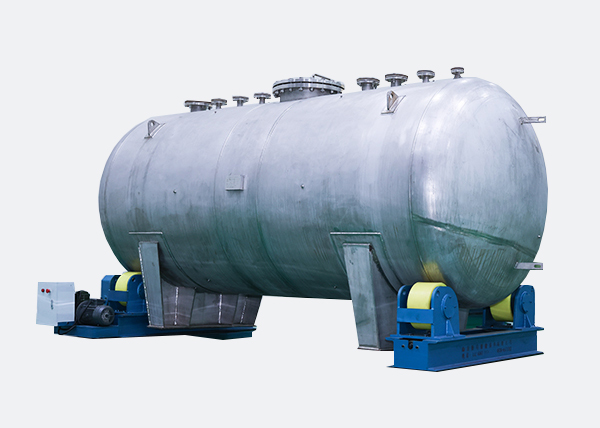
A PTFE storage tank is a metal container internally lined with PTFE (Polytetrafluoroethylene). In simple terms, it is a “steel body + chemical-resistant inner skin”.
From my production experience at Jiangsu Jietron New Materials Co., Ltd., we usually combine:
Carbon steel or stainless steel outer shell
PTFE lining (sintered or paste extrusion process)
Custom flanges, manholes, and safety fittings
This structure allows the tank to handle highly corrosive chemicals while keeping the strength of metal.
It is widely used in:
Electronic chemicals
High-purity solvents
Acid/alkali storage
Semiconductor wet process systems
When I visit customer factories, I often see the same problem: corrosion.
Stainless steel works well in many cases, but once you deal with strong acids like HF or mixed solvents, it starts to fail.
PTFE storage tank solves this issue because:
It has near-zero chemical reaction with most media
It maintains purity of stored chemicals
It reduces contamination risk in high-end industries
It extends equipment lifespan significantly
If stainless steel is “strong armor”, PTFE is “invisible protective coating”.
Below is a comparison based on real project feedback and industry data.
| Medium Type | Stainless Steel 316L | PTFE Storage Tank |
|---|---|---|
| Hydrochloric Acid | Poor | Excellent |
| Hydrofluoric Acid | Not suitable | Excellent |
| Sulfuric Acid | Medium | Excellent |
| Organic Solvents | Medium | Excellent |
| Factor | Stainless Steel Tank | PTFE Storage Tank |
|---|---|---|
| Average Service Life | 5–10 years | 10–20 years |
| Maintenance Frequency | Medium to High | Low |
| Downtime Risk | Higher | Lower |
| Item | Initial Cost | Long-Term Cost |
|---|---|---|
| Stainless Steel Tank | Low | High (maintenance + replacement) |
| PTFE Storage Tank | Medium-High | Lower overall lifecycle cost |
In my daily communication with clients, I always highlight these parameters:
Tank volume (from small pilot units to large industrial storage)
PTFE lining thickness (usually 2–6 mm depending on medium)
Operating temperature range
Pressure conditions
Nozzle and flange configuration
At Jietron, we also design custom systems for electronic chemicals and gas-related storage systems, which require extremely strict cleanliness standards.
Let me share some real-world usage cases I’ve seen:
Used for ultra-pure acids and cleaning agents. Any contamination can cause wafer defects.
Storage of etching and cleaning solutions for solar wafer production.
Used for intermediate chemicals where purity matters.
Strong corrosive solvents require stable storage systems.
In all these cases, PTFE storage tank is not optional—it is necessary.
When customers ask me for recommendations, I usually follow a simple logic:
Is it acid, solvent, or mixed chemical?
Higher concentration = higher lining requirement
Indoor, outdoor, pressure system, or vacuum system
Vertical or horizontal tank
Heating or non-heating system
Agitation requirements
This is where engineering experience matters more than product catalog.
Even the best PTFE storage tank needs correct usage.
Improper installation causing flange leakage
Mechanical damage during transport
Incorrect chemical mixing beyond design limits
Avoid metal tools scratching internal lining
Regular pressure inspection
Use proper grounding for chemical safety
Clean with compatible solutions only
Good operation can easily extend service life by 30–50%.
It provides strong corrosion resistance and protects stored chemicals from contamination.
Yes, typically up to around 200°C depending on design.
Yes, if properly installed and maintained, it can last over 10 years.
Not completely—each has its own use case, but PTFE is preferred for corrosive media.
Yes, at our factory we provide full customized design based on process requirements.
From my experience in fluorine-lined equipment manufacturing, I believe PTFE storage tank is not just a product—it is a solution for modern high-purity and high-corrosion industries.
At Jiangsu Jietron New Materials Co., Ltd., we continue to develop integrated systems including storage tanks, pipelines, valves, and gas handling systems to support semiconductor, photovoltaic, and electronic chemical industries worldwide.
If you are choosing between materials, don’t just look at price—look at lifecycle performance and process safety. That is where real value comes from.
Address: No. 1 Jingpohu Road, Suqian-Suzhou Industrial Park, Suqian City, Jiangsu Province
Xu Hao: 13813955525
Xu Gang: 15189058237
E-mail: zhaojiguang@jsjcxcl.com.cn


Copyright © 2023 Jiangsu Jiechuang New Materials Co., Ltd sitemap
This website uses cookies to ensure you get the best experience on our website.

 Pусский
 日本語
日本語 한국어
한국어 हिन्दी



 WhatsApp
 Phone
Phone